It’s been four years since the reimagining of the God of War franchise released and changed the way many gamers (myself included) think about how every aspect of a game can come together into such a moving piece of entertainment.
When the sequel was announced, I will admit I was worried there was no way it could recreate that feeling again without being too samey. Luckily after about 50 hours of gameplay in Ragnarok I can say those worries were unfounded… mostly. Let’s get into it.
Ragnarok’s Story
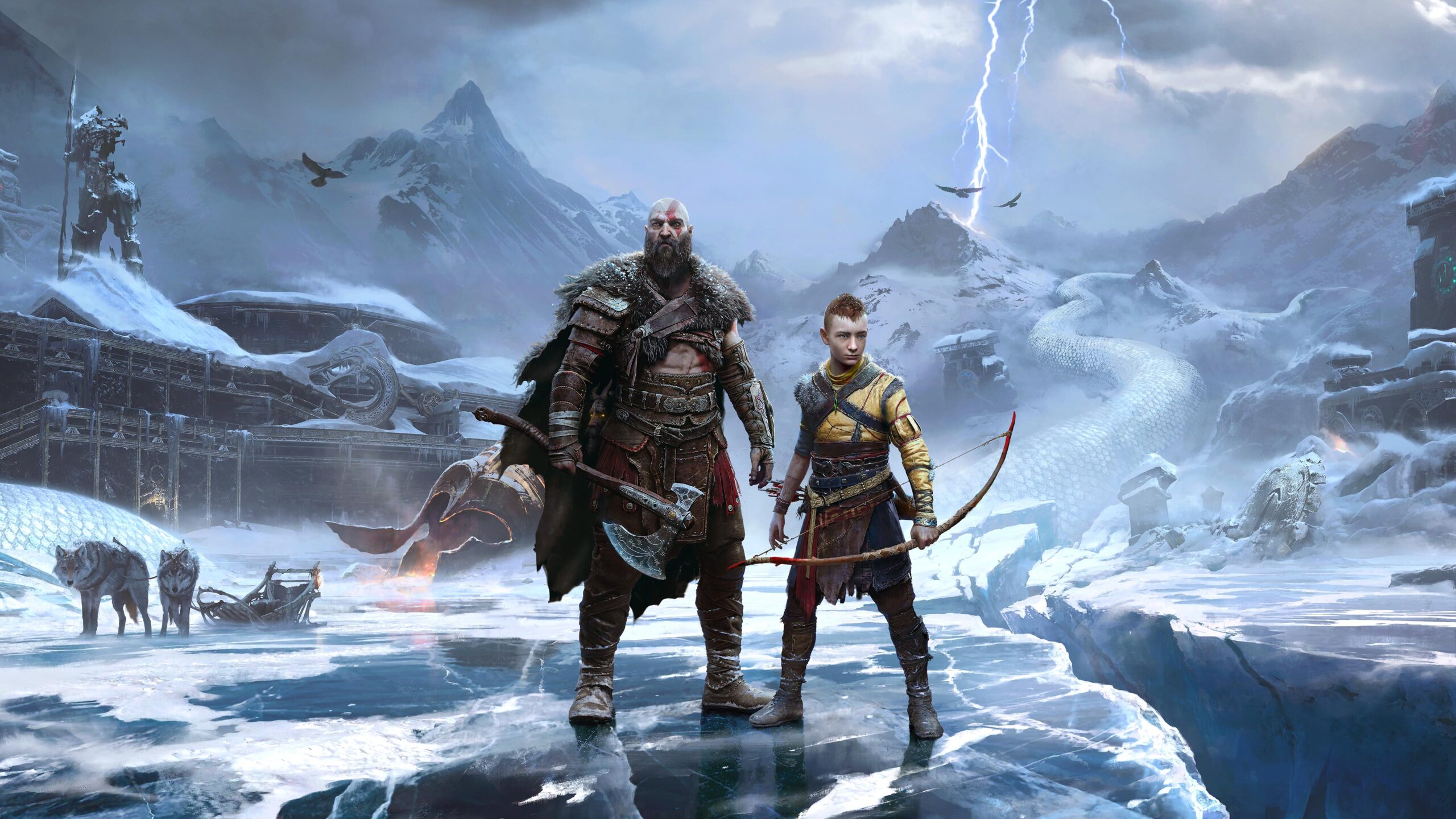
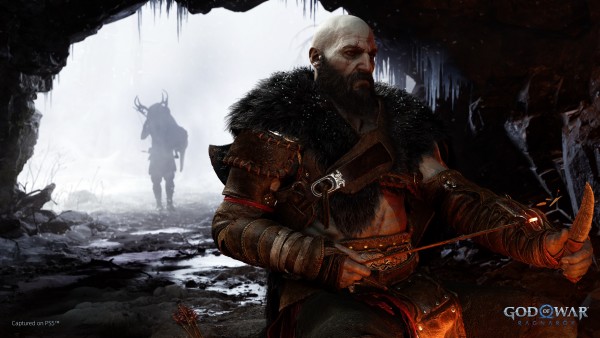
Ragnarok picks up narratively in the close future after the events of the first game. We are right back with the Kratos we grew to know and love and Atreus who’s fully entered that awkward phase between being a boy and a young man. The writers put effort into showing us that while these are the same characters, they haven’t forgotten their lessons and character arcs from the first game. Although every supporting character is outstandingly written and voice acted, this is still a story about what it means to be a good parent and what growing up entails.
The writers do an excellent job of allowing Kratos, Atreus, and their relationship to evolve in a natural way. Yes, we still get Atreus rebelling and longing to be seen as an adult in the eyes of his father and Kratos not hesitating to put him in his place, but we also see Kratos trusting Atreus and letting him lead the way, even if only to allow him to make a mistake that he will learn from. All the while being there to support his son and help him learn. We see Atreus have the self-awareness to question if he’s heading down the right path. We see character growth.
As previously mentioned, all the side characters are exquisitely written and voice-acted while having stories that help explore and expand on the overarching themes in the game. Not only do we get more time with the notable characters from the first game, but many more are introduced that hold the same quality. Ragnarok manages to introduce their versions of major figures in Norse mythology that are not at all what you’d expect, yet somehow seem more right than whatever was in your head (fat thor is best thor).
The story in Ragnarok is notably longer than in God of War (2018) and depending on how you play can suffer from some pacing issues with companion characters having to give the player audible cues that essentially say “well we can get on with this mission of dire importance, or we can go do some side quests.” It’s not terrible, but instead of the game feeling like it progresses naturally, it tends to play like the main acts of the story are broken up by intermissions where you’re encouraged to explore other mechanics, find collectibles or complete side quests that flesh out lots of lore in the game.
God of War’s Gameplay
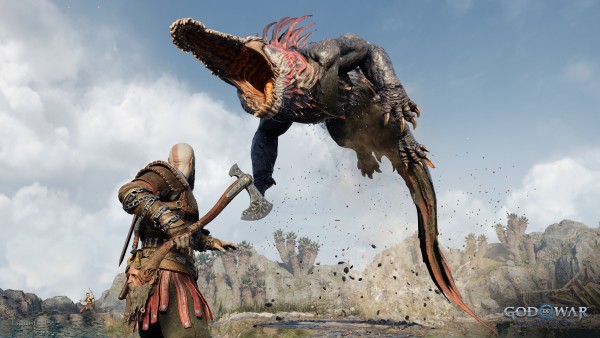
If you played God of war (2018), you pretty much know exactly how it feels to play Ragnarok. The gameplay is really good for the first iteration, but I do feel like there was a missed opportunity when it comes to expanding combat and gameplay. This is to say they expanded things just enough that you couldn’t accuse them of not expanding them at all. Luckily the first game had a lot going for it in the way of combat.
The most welcome difference in combat in Ragnarok is that you do spend some time with companions other than Atreus and you don’t spend 100% of your time playing as Kratos. These are great steps in the right direction, but the core gameplay is very much the same with all of its well-balanced and just plain fun combat, but not devoid of a few of its shining flaws.
The combat tends to become a game of watching your back. Often when I took damage, it was from enemies that spawned out of the environment behind me and out of the camera. The camera could use some work in general and would benefit from customization options. Another welcome addition would have been the ability to dodge or block out of animations. These are small complaints that don’t detract from the experience, but it’s just a few examples of how you don’t need to reinvent the combat to make the sequel feel more polished than the original.
Another problem is that progression through exploration seems to have scaled with the length of the story. You don’t get to start out Ragnarok with all the light and heavy runic attacks you left off within the first game, so you need to explore them again maybe I missed a few chests, but I went hours without any heavy runic attacks on my weapons… This creates a lack of cohesiveness between the story and gameplay. Speaking of chests…
I love a good loot drop, but at times through my 60 hours in Ragnarok, I was vaguely reminded of a borderlands game with how many chests I was coming across and how much loot I was getting. After a while, it felt like an inflated currency. I just didn’t care that I got another Asgardian ingot, luminous alloy, or purified crystalline. Unless you did some serious digging and had an armor set that you were really going after, it was all just gibberish. You loot every chest you see and hope to have the resources needed to upgrade what you want next time you hit the shop. It felt even more disconnected than the first game.
And most of the chests with the good loot are hidden behind puzzles. Repetitive puzzles. Many are the same style of puzzle that were present in 2018, but there are a few iterations fueled by new abilities. Whether you enjoy this gameplay will be very subjective, but I personally found them to be too frequent to the point of even time wasting. I don’t mind the optional puzzle to get you to the special chest, but what bothered me were the times when a major story beat would occur, and you’d be mentally decompressing or eager to get back to continue the story, but you couldn’t just go back the way you came, because something happened to the environment and now you need to solve a puzzle to get through. It just seemed like every time I turned around I was engaging with the puzzle mechanic of the gameplay more than I was with the combat.
Final Thoughts On GoW Ragnarok
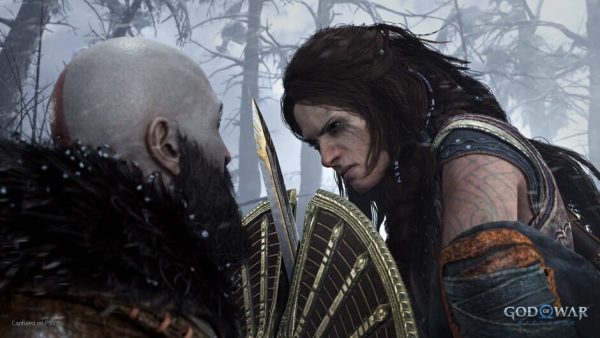
God of War 2018 was a masterpiece. Ragnarok retains much of that same magic while failing to innovate enough or solve some of the flaws its predecessor had in order to grant it that same title. That being said, it’s still a masterclass in emotional storytelling and cinematics. While it fails to hit any higher highs than its predecessor, its story still retains the ability to make you laugh, make you cry, or move you to tears in a way that no other game has since 2018. I can’t wait to see where the next iteration will take us.