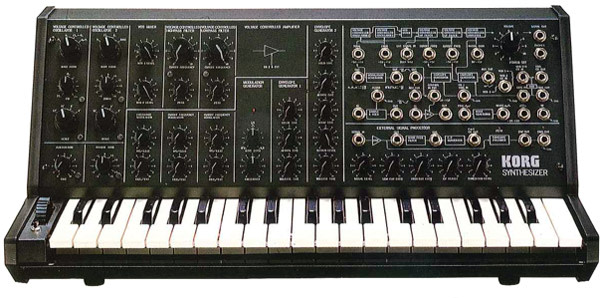
Back in the 1970s, Korg brought the now-vintage MS-20 to market and its popularity has never slowed its roll. Featuring a wealth of features, sought-after filters, and powerful external signal modulation, there was a lot to love in the design of this iconic synth.
But as the ages have passed, this popularity might have acted to the synth’s detriment as it went from studio and stage essential to coveted collector’s item. And with that, comes a hefty price tag (most sites are selling them used for upwards of $1,500). Yet many producers to this day are looking to tap into the sounds and complex routing abilities of the original Korg MS-20. So what are they (and I would assume you) to do?!
That’s why we did the heavy lifting and dug around the internet to find the top six alternative synths that sound and behave just like the vintage MS-20, but cost a fraction of the price.
BEHRINGER 2600
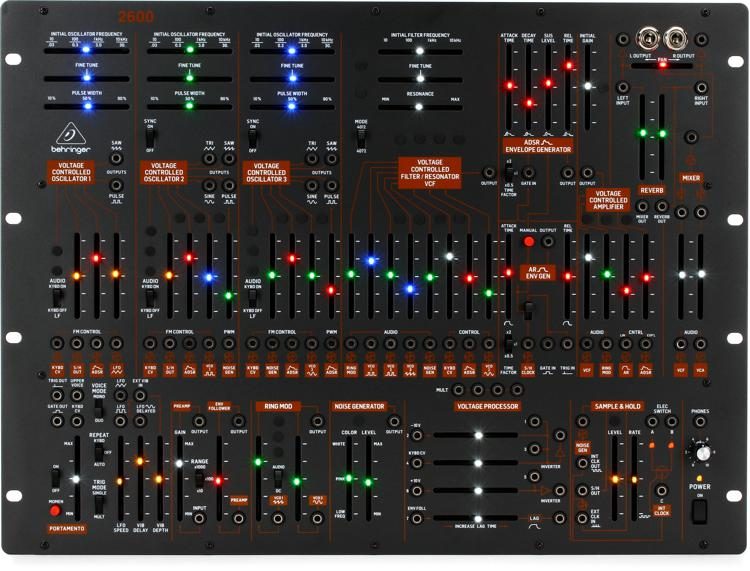
The Behringer emulation of the classic 2600 is an easy recommendation for this list. Behringer’s clone of Korg’s iconic modular synth is teeming with that old-school analog flavor that rewards those who build their patches from the ground up, experimenting as they go.
By forcing producers to rely on signal path and common modular terminology, the 2600 forces you to learn the ins and out of modular synthesis in a far more musical device (just like the Korg MS-20)
HOW I USE THE BEHRINGER 2600
The Behringer 2600 is at its best when recreating the classic and iconic sounds of the 70s and 80s, and makes soaring leads and modulated sustained lines as good, if not better, than the vintage Korg MS-20.
In fact, it has the potential to do sustained drones and pedal notes better even than the Korg through the use of the 2600’s ‘Initial Gain’ parameter which feeds a steady-state noise through the synth for you to modulate without the need of inputting MIDI. It’s a drone-makers paradise.
But that’s not all…
I’ve always seen the Behringer 2600 as the gateway to modular setups and offers a streamlined way to learn patching and signal routing. If you are looking to get into modular synthesis and want to break the habit of only relying on presets to achieve your signature sound, this synth is an easy recommendation.
Learn More About The Behringer 2600 While Supporting Our Small Team Of Writers Through Our Partnership With Sweetwater Here
KORG MS-20 Mini

The Korg MS-20 is a powerhouse synth that packs a ton of functionality and incredibly unique hardware into a synth that’s exactly 85% the size of the original model. Even better, Korg managed to do this all without changing any of the components of the original hardware. It’s simply a smaller device with more modern features! How dope is that.
The unique filter sweeping resonance, which is this synth’s strongest asset, might not be for everything. But it can be an incredibly powerful tool for making FX, leads, and bass patches from the ground up.
HOW I USE THE KORG MS-20
When I first used Korg, the complex and larger-than-life patch bay (the original used 1/4″ phono jacks) made it the perfect synth for creating unique FX for my tracks, as this makes this new Korg incredibly easy to get lost in the sound design process.
And the Korg MS-20 is the same way.
This beefy synth is not meant for presets, and the best results you can get from it actually come from diving deep into the patch bay while building the sounds from the ground up; leading to interesting and unique patches every time you dive into the synth.
Learn More About The Korg MS-20 While Supporting Our Small Team Of Writers Through Our Partnership With Sweetwater Here
ARTURIA MINIBRUTE
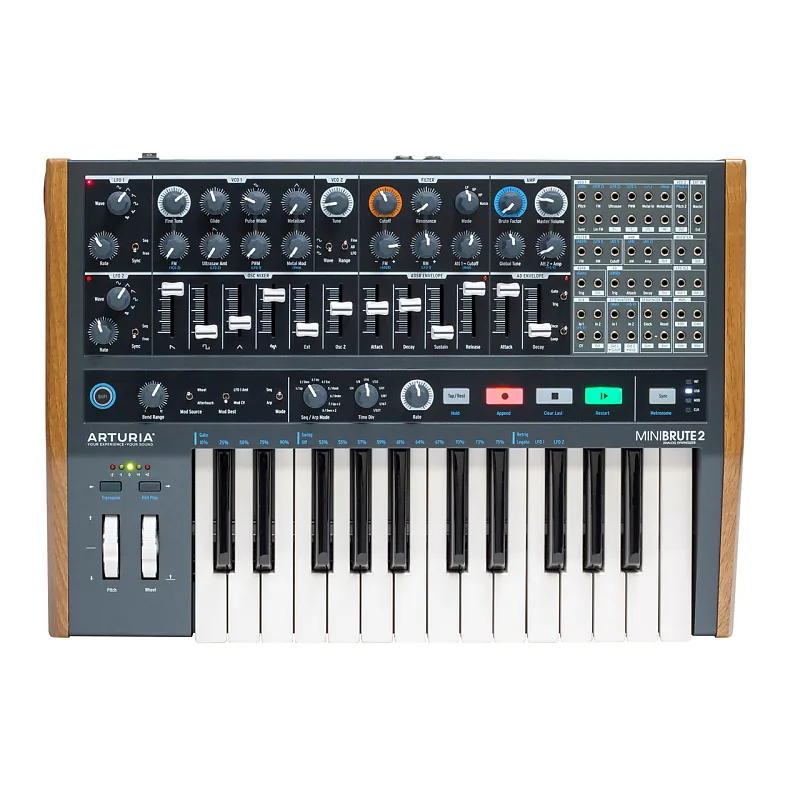
The MiniBrute’s aesthetic and playability fall right in line with the Korg MS-20, and even feature a couple of stylistic features that might be more well-received by some producers. The primary one of these is the nature of the envelopes, which are laid out as faders instead of dials. From a tactile perspective, this is highly preferred by some producers and might be enough to convince them that this synth is better for their studio than the vintage Korg MS-20.
It also brings a level of versatility that rivals that of the Korg MS-20. That is to say; this synth can do almost anything (once you figure out how it works). Whether you want to create ripping leads, authentic woodwind sounds, or gritty bass lines, this synth can see it done.
HOW I USE THE MINIBRUTE
I often used this synth as a workhorse piece of hardware. Its semi-modular nature made it great for experimentation, which made me reach for this synth first and foremost when I had an empty canvas or project. Often it would morph into a completely new and inspiring instrument that I would use to kickstart an entire project.
Few synths can carry a song and be as versatile as the MiniBrute (save for the Korg MS-20, of course), which is why this is an easy recommendation for producers of any level.
Snag This Synth Through Our Partnership w/ Sweetwater Here
MOOG MOTHER-32
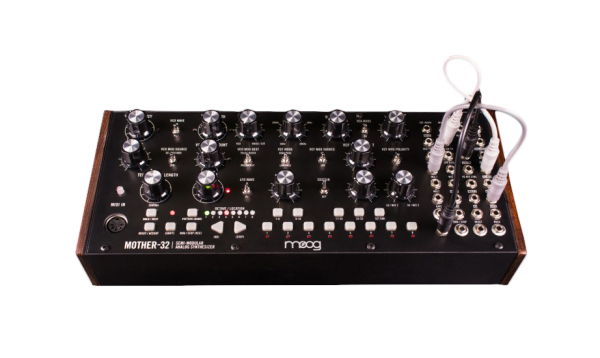
With just one oscillator and an extensive patch bay, the Moog Mother-32 offers some of the most complex routing and sound design functionality I have seen in a desktop (or eurorack-compatible) synth. Where this little budget-friendly Moog shines over even the Korg MS-20 is its heightened ability to play better with more common modular units, allowing this to be a more impactful piece of a larger puzzle instead of just a great synth in its own right.
Sure, the Korg has an amazing filter with a screeching resonance that sounds amazing when other outside gear is rather through it. But the Moog Mother-32 slots even better into more complex modular rigs.
HOW I USE THE MOOG MOTHER-32
When I first used the Korg MS-20, I wasn’t familiar enough with it to do anymore more than a single-note sequence from which I just made interesting modular sequences from the single note to add a bit of rhythm to the track I was working on. Recreating these similar one-note modular-like sequences with the Moog Mother-32 has become an essential part of my own workflow.
Sure, the Korg MS-20 has more patachability, but both synths can achieve the same level of sequences and modulation. Sure, it takes some getting used to and familiarizing yourself with the ecosystem of the synth. But that is exactly what most people looking to ditch presets and build sounds from the ground up are all about.
Learn More About The Moog Mother-32 While Supporting Our Small Team Of Writers Through Our Partnership With Sweetwater Here
BASS STATION II
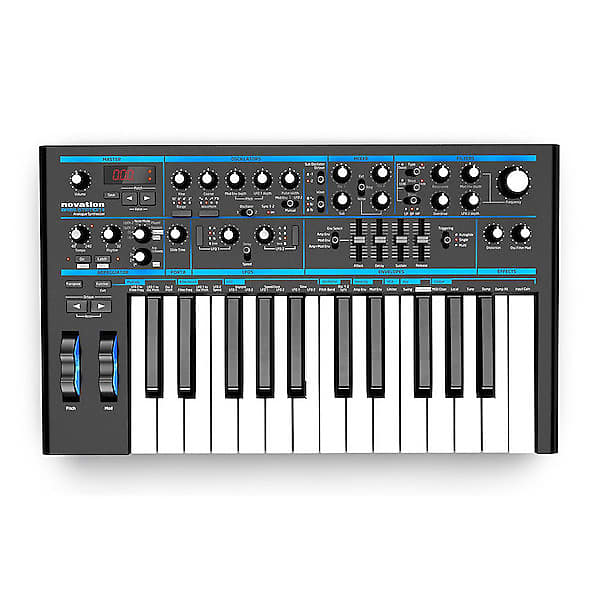
Much like the Minimoog, the Novation Bass Station II is a household name throughout electronic music production (even if you don’t recognize its signature sound instantaneously). It toes the line between analog warmth and digital precision which allows for punchier sounds that are equally as complex as the Korg MS-20.
Despite the name, this synth can produce soaring and screeching leads as quickly as thundering bass lines. As a bonus, the handful of onboard effects, predominantly the overdrive-equipped filter section, allows for that expensive analog warmth without breaking the bank and opens more creative doors than even the Korg can offer.
HOW I USE THE BASS STATION II
Its filter section makes the Bass Station a great alternative to the MS-20. Hot damn, that filter has a bite to it that rivals that of even the most expensive boutique synths on the market. And while the Korg’s biggest claim to fame is its filter resonance, this synth offers its own unique take on the feature that few other synths on the market can rival.
This filter section makes this synth one of my go-to tools for aggressive leads that jump out of the speakers and command attention. Write in a melody line and modulate that filter; you can achieve exciting and complex tonality with little effort.
Snag This Synth Through Our Partnership w/ Sweetwater Here
Future Retro XS

Future Retro XS is a phenomenal true-analog synthesizer that has all of the modern thickness of gear released in recent years while also having the grit and texture of gear from yesteryear. What’s even better, it’s a desktop synth that takes up only a small amount of real estate on your studio desk.
Both the MIDI and the CV/GATE can be, if you choose, used independently of each other, allowing for even higher levels of customized control and a variety of configurations depending on your studio needs.
HOW I USE THE Future Retro XS
Much like the Korg MS-20, the Future Retro XS has a nice and warm sound that sounds authentic and pure. Unlike many more modern synths on this list, it doesn’t sound perfect (and that’s its biggest benefit).
This is why I like using the Future Retro XS more on backdrop elements like pads, pedals, and drones as the off-kilter pitch and softer tonality than many of the more biting and modern synths. It’s amazing for creating monophonic textures and sound beds in the background that add nuance without drawing too much attention to themselves.

Will Vance is a professional music producer who has been involved in the industry for the better part of a decade and has been the managing editor at Magnetic Magazine since mid-2022. In that time period, he has published thousands of articles on music production, industry think pieces and educational articles about the music industry. Over the last decade as a professional music producer, Will Vance has also ran multiple successful and highly respected record labels in the industry, including Where The Heart Is Records as well as having launched a new label with a focus on community through Magnetic Magazine. When not running these labels or producing his own music, Vance is likely writing for other top industry sites like Waves or the Hyperbits Masterclass or working on his upcoming book on mindfulness in music production. On the rare chance he's not thinking about music production, he's probably running a game of Dungeons and Dragons with his friends which he has been the dungeon master for for many years.