2023 is on pace to be one of the best years for guitar pedal enthusiasts in living memory as more and more boutique manufacturers release highly specialized pedals to communities of guitar players and music producers alike. Gone are the days when you’d only use such pedals for their intended purposes (solely for guitarists), as more and more hardware synth lovers and creative sound designers are using pedals in new and innovative ways to achieve their sounds.
The Maestro Original Collection was initially brought to market early last year. The pedals have quickly gained popularity and notoriety for their analog sound, classic emulation, and affordable price point. Among these is the Maestro Ranger Overdrive Effects pedal, which we recently had the chance to review. So, let’s dive into what we loved about this effect, on guitars and synths like the Korg MS-20, both of which are essential parts of our production setup.
Learn More About This Pedal While Supporting Our Small Team Of Writers Through Our Partnership With Sweetwater Here
What Is The Ranger Overdrive Effect Pedal?
The Maestro Ranger Overdrive is a top-of-the-line dirt pedal for music producers and guitar players. It draws inspiration from the vintage era’s finest tube amplifiers, offering an all-analog circuitry that authentically replicates classic tube tones. Through its sleek and streamlined user interface (boasting only three knobs and a mode toggle, all of which are a hallmark of the Maestro line), users can get the maximum amount of sound manipulation in just a few turns of the dials.
The Ranger provides the brunt of its customizable functionality in its two distinct tonal options (Hi and Lo), the first being a remarkable reproduction of traditional tube overdrive that can be used alone or combined with the amp’s natural breakup. The second option is a cleaner tone that is highly responsive to pick attack and guitar volume, so it is a go-to choice for those seeking a dynamic always-on sound. The intuitive level, gain, and tone knobs provide a user-friendly experience for guitarists, making the Ranger an effortless plug-and-play solution for coloration and light distortion and for bringing a coveted edge to your sound.
What We Loved About The Ranger Overdrive
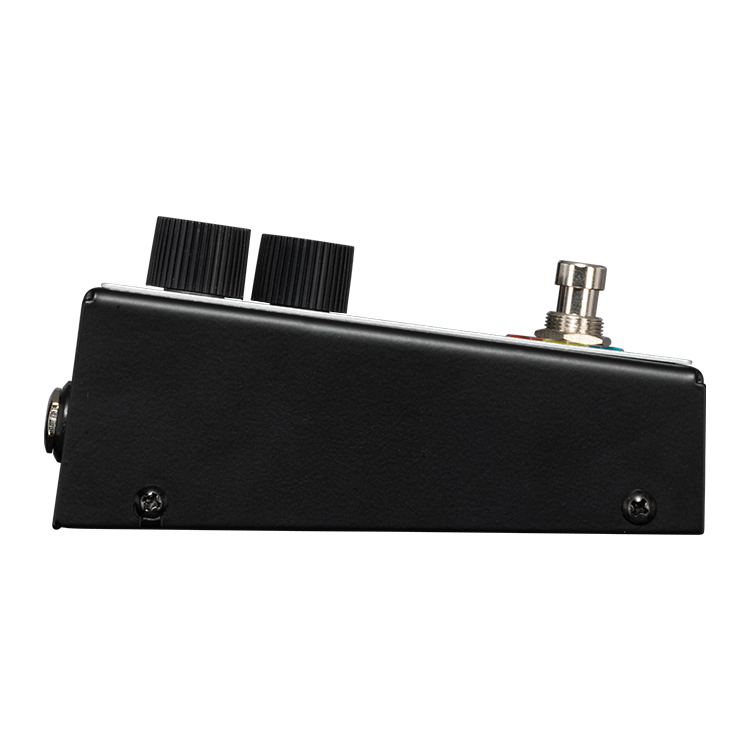
After messing around with the Ranger pedal in my studio for a couple of weeks, using it both on synths and my Stratocaster, I realized there were some standout features in this smaller metal drive box. While digging into every single minutia of its features would likely require a short novel, here are the three things that I found most appealing about this pedal right out of the box.
Analog Coloration
The gold standard in music production these days, where most producers are making music and shaping sounds completely on their laptops, is to make your music appear as though it was produced on expensive hardware in lavish studios. Saturation, coloration, overdrive, and other forms of harmonic excitement in your sounds are the best way to achieve this end, but even plugin versions of all these effects still struggle to compete against the tones and timbres of real analog gear.
Maestro Ranger Overdrive brings to a sound added just the right amount of rounded highs and warmed-up, chunky mid-range that my soft synths needed. Running synths like Deva and Serum from my interface through the pedal and then back again into Ableton was a complete game changer. This small and sturdy pedal might have single-handedly shelved a handful of my go-to distortion VSTs in one fell swoop.
Learn More About This Pedal While Supporting Our Small Team Of Writers Through Our Partnership With Sweetwater Here
It’s Meant To Do The Legwork

When used on guitars and as part of a multi-effect pedal chain on my pedal board, I consistently found the best end results when I used the Maestro Ranger Overdrive to do the heavy lifting in terms of gain staging. Usually, I rely on my compressor pedals from Boss or Keeley to do the majority of the makeup gain and volume moves, but the additional warmth and coloration that the Ranger Overdrive pedal introduces when the gain is nudged (or sometimes cranked) was undeniable.
Whether you slot this pedal into the early spots in your pedal board or second only to the final compressor, you’ll be consistently surprised at how much of the heavy lifting and legwork this pedal can pull off without the sound being thrashed to hell (unless of course that’s the effect you’re after).
It’s Light & Angry
So many distortion plug-ins, including some of my go-to solutions, have a distinctive and angry sound to them that thrashes the signal and only works in very specific circumstances. This is all fun and games until the moment you want to work on any type of music that falls outside the punk rock and grunge genres.
But the Maestro Ranger Overdrive toes the line amazingly by having the option to add just a light tone and edge without sounding overly chunky and distorted. And the shaping of the sound is even easier to dial in with the pedal’s three, user-friendly knobs that allow you to get the tasteful touches of distortion and overdrive that you need in just a few adjustments.
Overall, it’s a perfect mixture of overdrive and distortion without leaning so heavily to one side that it can only be used in select circumstances.
Things I Wasn’t Too Crazy About
I usually save this spot in all of my reviews to note things that could be improved upon in an item or product and offer my solution for the said problem for the added context and perspective on where my gripes lay. That being said, I didn’t really find anything that could be changed with this pedal.
Overdrive effects should never be seen as a Swiss Army knife solution for all your saturation problems. They typically do one or two things really well and that’s exactly what this pedal does (at a more affordable price point, I should note, than many other overdrive pedals on the market). We went into this review expecting the pedal to produce a fairly specific sound, and we found that it over delivered on that assumption in the best possible way.
What more could you ask?!
Specs On The Ranger Overdrive Effects Pedal
- Pedal Type: Overdrive
- Analog/Digital: Analog
- Inputs: 1 x 1/4″ (instrument)
- Outputs: 1 x 1/4″
- True Bypass: Yes
- EQ: Tone Control Knob, Tone Select Switch
- Power Source: 9V-12V DC power supply (sold separately)
- Batteries: 1 x 9V
- Power Usage: 14.5mA
- Height: 2.5″
- Width: 3.45″
- Depth: 5.04″
- Weight: 1.1 lbs. (including battery)
Learn More About This Pedal While Supporting Our Small Team Of Writers Through Our Partnership With Sweetwater Here

Will Vance is a professional music producer who has been involved in the industry for the better part of a decade and has been the managing editor at Magnetic Magazine since mid-2022. In that time period, he has published thousands of articles on music production, industry think pieces and educational articles about the music industry. Over the last decade as a professional music producer, Will Vance has also ran multiple successful and highly respected record labels in the industry, including Where The Heart Is Records as well as having launched a new label with a focus on community through Magnetic Magazine. When not running these labels or producing his own music, Vance is likely writing for other top industry sites like Waves or the Hyperbits Masterclass or working on his upcoming book on mindfulness in music production. On the rare chance he's not thinking about music production, he's probably running a game of Dungeons and Dragons with his friends which he has been the dungeon master for for many years.