New MIDI controllers come to market near-daily, but none seem to change the game as much as their marketing departments predict they will. Sure, they have new bells and whistles, more dials and faders, but we’ve all seen that before (and more times than we can count).
But after using the Jamstik Studio extensively in the studio for over a month, we discovered that this might be the controller that changes everything (at least for a particular set of musicians, producers, and students). In this latest review, we’ll dive deep into just how far MIDI Guitar technology has come in the past few years, what this guitar specifical is capable of, and if it deserves a spot in your studio arsenal.
Before diving in, more information can be found here on Jamstik’s official website. Now let’s get to it…
What Is The Jamstik Studio?
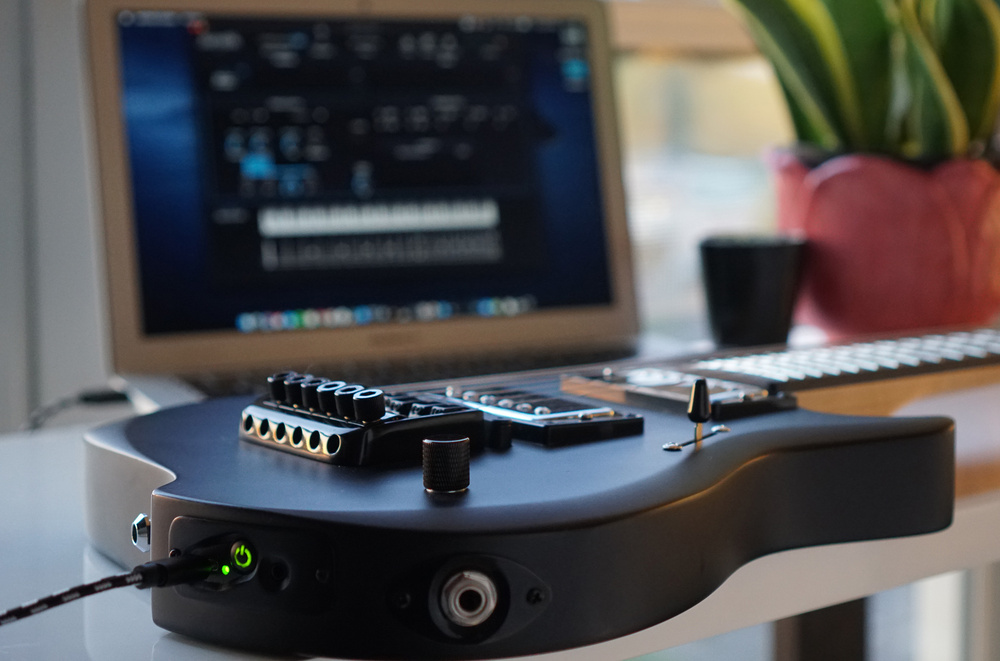
The Jamstik Studio is an innovative new guitar MIDI controller made by the Minneapolis-based Zivix. It’s a follow-up design that improves upon the lessons and features the company first broke ground on with its Jamstik+ device, and in the four or more years since the Jamstik+ was released, the difference between the two controllers is night and day.
We’ll be diving into some of the most standout features of the Jamstik Studio momentarily. Still, a bird-eye perspective of the guitar shows that it’s more than just another half-baked novelty like many other Guitar-like MIDI controllers on the market. It’s fast, responsive, and arguably the best pitch-to-MIDI-based device.
Until now, pitch-to-MIDI has always been one of those music-producer pipedreams that sound good on paper but fall short in practice. But the Jamstik Studio’s ability to convert the pitch and amplitude played on the guitar into readable and convertible MIDI data is second to none and only infrequently shows signs of faulty interpretation.
If you’re new to pitch-to-MIDI, picture a world where you could control pitch bends and more without removing your hands from your instruments to affect the synths Mod Wheel, Pitch Wheel, or Envelope Mod Amount. Going further, imagine being able to bend a note on your synth as much as John Mayer does on his Stratocaster in a fluid, natural, and human way without resetting MIDI pitch and data when it’s time to play the following note.
That’s precisely what the Jamstik Studio brings to the table, and it’s one of those rare qualities in a device whose potential is only matched by the creativity of its user.
What I Loved About The Jamstik Studio
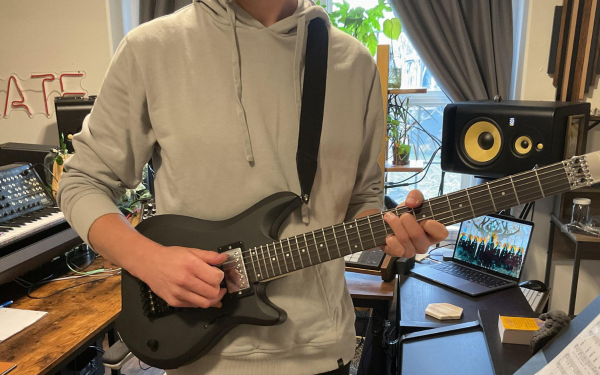
After having the Jamstik Studio in my production space for the last couple of months, I quickly found some standout features that instantly made me fall in love with the device. And while discussing every single one that would likely require a short novella, here are the top four bucket items that stood out to me after getting comfortable and familiar with the device.
It Feels Natural
Having played on my acoustic Taylor and Stratocaster Electric for the last decade, picking up the Jamstik felt fluid and natural. The size of the guitar is the most significant differential factor here, but I’ll chat about the benefits of that here shortly.
The guitar’s body is mahogany, featuring 24-frets and humbucker pickups. Anyone familiar with smaller travel guitars will feel right at home when they unbox the guitar, which is an unsung necessity if you’re new to MIDI guitars; they are devices far from conventional MIDI keyboard controllers that most producers are accustomed to making tunes on.
It’s Super Portable
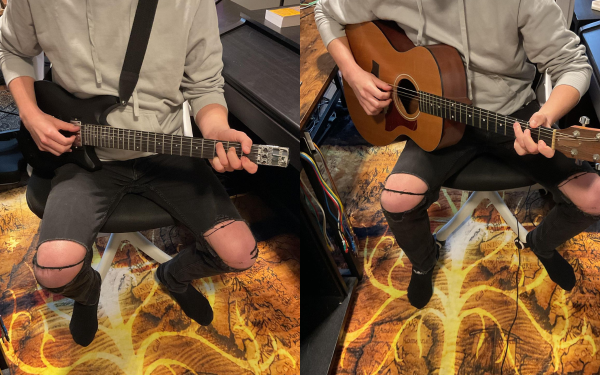
As mentioned above, the guitar’s design is meant to be as portable as possible. To achieve this goal, the Jamstik is roughly 2/3 the size of a standard electric guitar and comes with its travel-friendly bag that fits comfortably on your back or over your shoulder. The small design makes it easy to bring with you almost anywhere, whether to a gig, a jam session at a friend’s house, or a music lesson (this thing is a beast for educational purposes).
But that’s just the obvious benefits.
For me, the size of the guitar made it an easy device to use right in front of my computer and DAW space. My Taylor and Strat are bulky by comparison and require a dedicated corner in my studio alongside my amp and more. But the compact design allows me to play right where I work, which is a game changer.
It’s A New Way To Produce Music
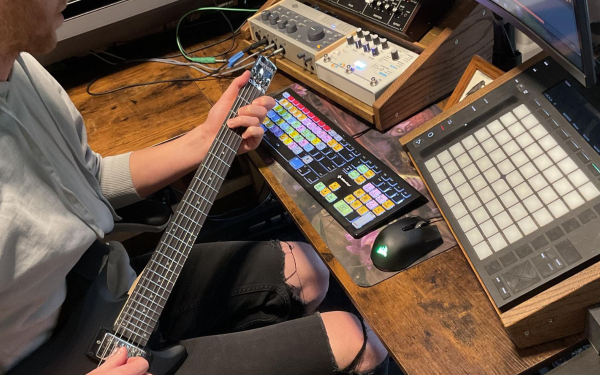
This might not be seen as the biggest boon to those producers who enjoy returning to the same workflow for all of their tracks, but there’s something to be said about working in a new creative space or through different creative means. Having done most of my composing using standard MIDI controllers like a Keyboard or a Push 2, being able to write melodies on another device changed the headspace that I was in during the writing process.
Sure, it’s a little thing, but it’s one of those little things that make all the difference in creative work.
It’s An Innovative MIDI Controller
The forward-thinking software and hardware of the Jamstik are genuinely second to none and not only help with the fluidity of playing but also open up a ton of creative potential that still has yet to be discovered.
MIDI Polyphonic Expression (MPE) is the secret sauce that allows for such naturality of playing through its loudness-tracking technology. Each string gets its own MIDI channel, which means individual messages can be sent to the individual channel. But the full MPE spec does even more!
It generates MIDI CC11 data based on how loud you play each string, tracking the loudness of your playing in real-time, while the degrees at which the string is bent is tracked by Pitch Bend. This gives you a natural guitar-playing experience, where things like damping with your left hand and muting with your right hand affect the sound you get.
It’s pretty sweet and has no limit to the cool stuff you could do with this technology save for what your inspiration and creativity can allow.
Software & Apps
Apart from your DAW, the Jamstik Creator app will be the central hub for all things related to the device. Within the app, you will find many presets to fiddle and practice with, alongside some of the more technical settings you need to dial in the guitar to your playstyle and playing needs. If you bust open the guitar and load it up in your DAW only to find that it’s not performing as you’d like, there is a 90% chance that the issue can be solved with their intuitive app!
The plurality in the headline of this section also speaks to the potential apps with which this guitar can sync. Seeing as the guitar independently sends MIDI data to an input source, there is no limit to the educational software you can pair with this device. Honestly, I wouldn’t be surprised if this device became an industry standard way for children to learn to play guitar via apps and online platforms. Whether you link it up with songwriting tools, notation software, or basic education resources, having the ability to have your guitar “speak” to another software can exponentially increase the speed at which you or a loved one learns.
And the fun doesn’t stop here!
Jamstik recently released a new mobile app that allows users to connect their Jamstik to their mobile devices using Bluetooth and USB to open up a wide range of new features. You can play various sounds in the app, brush up on your playing through various practice routines, tune your instrument, and more. Currently, the app is only initially available for iOS, but Android will also be available in Spring 2023.
With all this in mind, it’s also worth noting that you don’t need any of this to still get the maximum utility out of the Jamstik. This is because, while its standalone app comes with its own Mac/PC-compatible software, it’s unnecessary. You can plug the Jamstik directly into your hardware and instantly start sending MIDI data to your favorite hardware synths if you want!
What I Wasn’t Too Crazy About
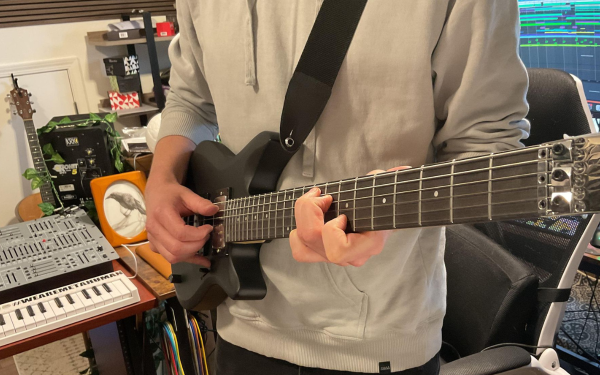
It is time to share two gripes I may have alluded to lightly throughout this article. Below are the two qualities of the Jamstik Studio that cause hesitation in potential purchasers of the device. It should be noted that while these qualities are worth taking the time to write about, they should be taken with a grain of salt, as MIDI Guitars, by nature, can be a little temperamental.
Playing Can Be Finnicky
All MIDI Guitars, not just the Jamstik, will need some dialing in and fine-tuning before they can accurately interpret the MIDI data you play with them, and this device is no different. You may find that wrong notes are played, strings are plucked without any data being sent, and more slight aggravations must be addressed.
Granted, even right out of the box, the Jamstik Studio still blows the competition out of the water regarding playback accuracy and functionality, but for those looking for a seamless transition from their softsynths to the guitar, be ready to make some needed adjustments.
Luckily, the Jamstik Creator app is the one-stop shop for all of these needs, and with allows you to dial in parameters like string velocity, tuning, and so much more so that the software of the device matches the needs and wants of your playstyle and sound.
So while these adjustments are standard with MIDI Guitars, the Jamstik at least sets you up for success by giving you an easy remedy instead of leaving you alone to troubleshoot the issues!
Tuning Is Tricky
Since this MIDI guitar is designed to be a travel-friendly device, there is no head of the guitar and no knobs for tuning. Instead, the tuning is done at the bridge using a minor key. And when I say small, I mean… small. And while there is a magnetic notch in the bridge to help prevent you from losing the key, I could easily see a world where that doesn’t quite go as planned.
Overall, tuning seems a bit convoluted; it involves the tiny key above and an Allen wrench alongside the conventional hassles that come with tuning instruments. And this is all coming from a guy in a temperature-controlled studio. Those in rooms whose temperature fluctuates should expect the pitch of the steel strings to fluctuate as the temperature ebbs and flows. And while there are a couple of different ways to tune the guitar, including the tuning key and notches in the tuning peg that use hard picks or your fingers to tune the guitar, it still can be tricky.
Jamstik has certainly thought ahead and gotten ahead of the problem here though as their aforementioned mobile app, Jamstik Control, allows for incredibly detailed tuning options to help you dial in the strings to perfection and avoid the brunt of these issues.
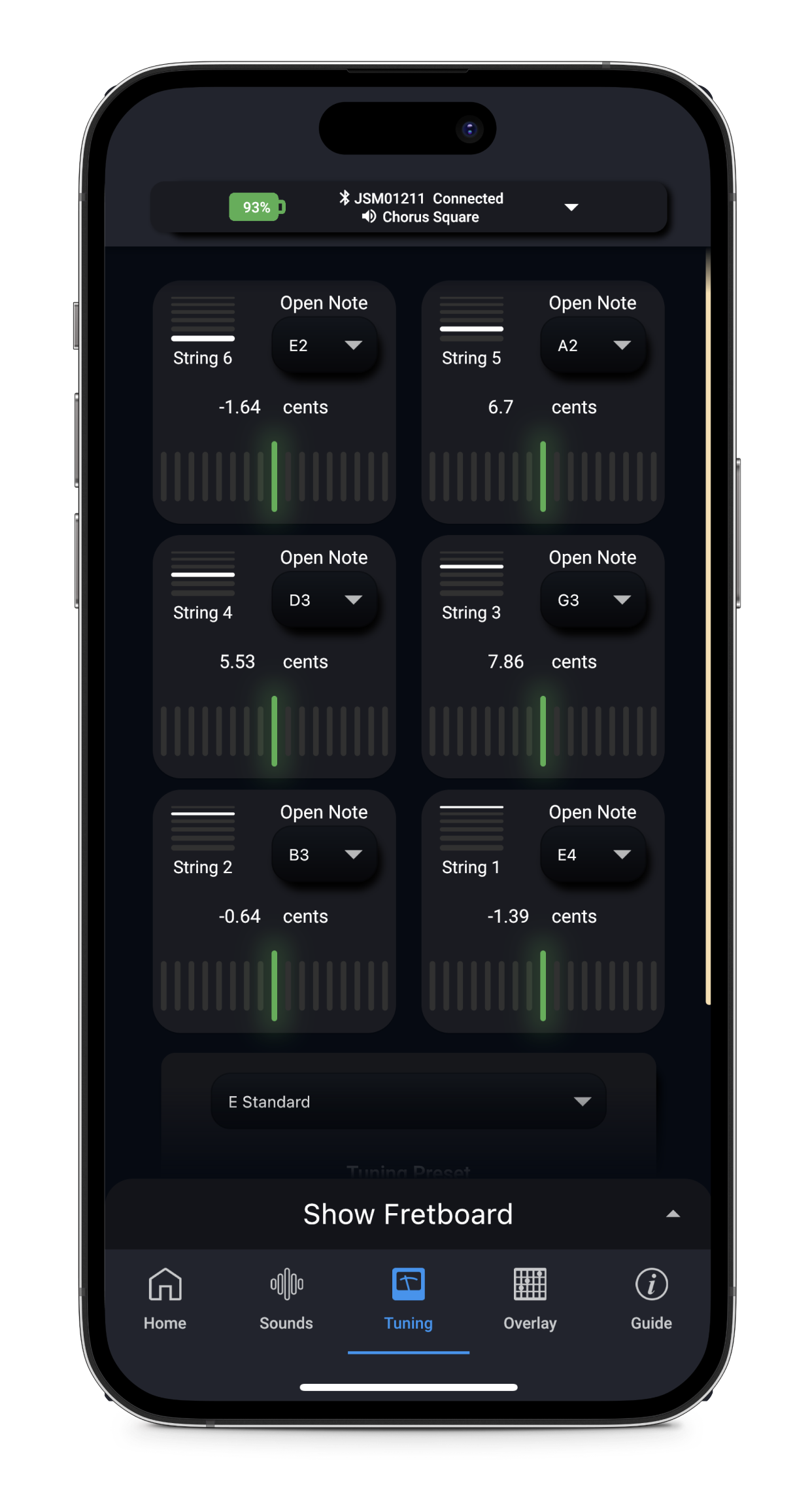
While writing this review, I heard from the Jamstik team that they are putting the final touches on a version with a guitar head. So if you’re looking for something less travel-friendly but easier to tune, keep an eye on their website!
Final Thoughts On The Jamstik Studio
After using the Jamstik extensively in the studio for the past month, I honestly can say that I am hooked on this thing. It is a unique instrument that fits into a certain niche of my workflow I never knew I had until I familiarized myself with this device. As such, I love this controller, and I can’t seem to get enough of it, just because it lets you create in a different headspace than on basic MIDI controllers and keyboards. That alone is worth the price tag for me.
But I also understand that many other producers haven’t been playing guitar for a decade as I have. For those producers, I could see their money is better invested in a more conventional controller. That being said, if you are one of these producers but have had an inkling to learn guitar, the Jamstik Studio’s ability to sync up with teaching apps and platforms for an even more intuitive learning experience might be the exact solution you need to get your six-string skills up to speed!
Overall, I was highly impressed by this device, and I encourage you all to at least give this MIDI Guitar a health consideration when looking for your next studio upgrade!

Will Vance is a professional music producer who has been involved in the industry for the better part of a decade and has been the managing editor at Magnetic Magazine since mid-2022. In that time period, he has published thousands of articles on music production, industry think pieces and educational articles about the music industry. Over the last decade as a professional music producer, Will Vance has also ran multiple successful and highly respected record labels in the industry, including Where The Heart Is Records as well as having launched a new label with a focus on community through Magnetic Magazine. When not running these labels or producing his own music, Vance is likely writing for other top industry sites like Waves or the Hyperbits Masterclass or working on his upcoming book on mindfulness in music production. On the rare chance he's not thinking about music production, he's probably running a game of Dungeons and Dragons with his friends which he has been the dungeon master for for many years.