As software capabilities such as MIDI, Bluetooth, and sensory technology continue to improve, new developers and companies find ever-increasingly more-clever ways to utilize the technology in innovative and boundary-pushing ways. And no industry is more hungry for such creative and innovative technology than the music industry.
Whether it’s in an artist’s hunt for a new performance tool to make their sets stand out, a producer looking for a new way to make music that breaks the templatized standards of today, content creators looking for a way to streamline their process, or so much more, we creators are always on the lookout for the next device that could be our new X-Factor in the things we are making.
The Instruments of Things is a German music-tech company created in 2018. Their recent release, the SOMI-1, seeks to merge movement and music into a fluid and helpful tool for content creators and musicians. We got our hands on one of these devices to find out just how good it is, how useful it can be in the studio, and whether it’s an effective merger in technology or just a step in the right direction.
What Is The SOMI-1 Kit?
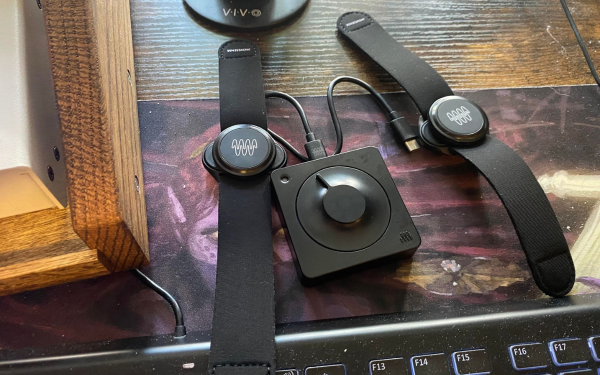
The SOMI-1 is a novel technology designed to enable users to generate music through their body movements. The OMS provides a unique music creation experience for professional musicians and hobbyists by incorporating advanced motion capture and sound synthesis technologies. This system streamlines music production and manipulation, allowing users to interact with an intuitive interface that responds directly to their physical gestures. The fact that it’s based on MIDI signal means that, while it’s often billed as a device for musicians, the true applications and potential that this little band brings can only be set by its users.
To function, the OMS employs wearable sensors attached to different parts of the user’s body, which work in tandem with a sophisticated software package to convert movements into musical notes and sounds. The system offers various customizable options, including various instruments, soundscapes, and genres to suit individual preferences. This versatility encourages users to explore new styles and establish their musical identities without relying on traditional instruments. Additionally, the OMS promotes a more immersive and engaging approach to music creation, turning the process into an exciting adventure in self-expression and experimentation.
What I Loved About The SOMI-1 Kit
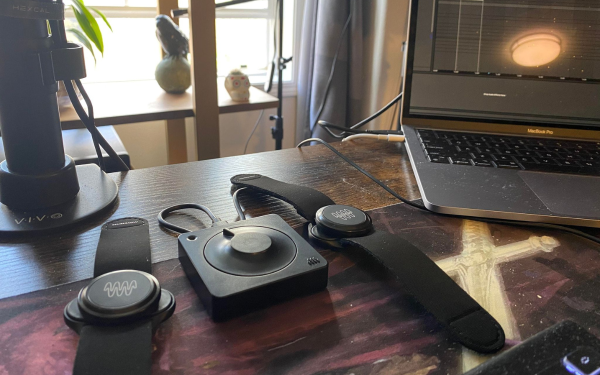
After using the SOMI-1 kit in my studio for a month or two, I found a lot to like about this little wrist-based device. So let’s dive into some of my favorite features and way’s that the SOMI-1 could be used in your world.
Its Presets
We’ll be diving into the learning curve that this device comes with momentarily, and though it can be a bit steep, the wealth of presets it comes with helps you get up and rolling with the device in no time. Sure, the presets don’t instantly feel like Grammy-winning patches and devices right out of the box – that would be impossible for a device whose potential, I believe, can only be matched by the creativity of its user; the presets are exciting and fun to play with right out of the box.
And this makes all the difference.
Because these types of devices always take a bit of time to get used to and to attune yourself to how they operate. This process can often be frustrating if the presets, and stock sounds the device comes with aren’t fun to use. But these presets goad you into playful experimentation and give you a great “lay of the land” of everything the device can do, making you excited to continue to use it and explore creative ways for this device to fit into your own needs, wants, and workflows.
Its Feel
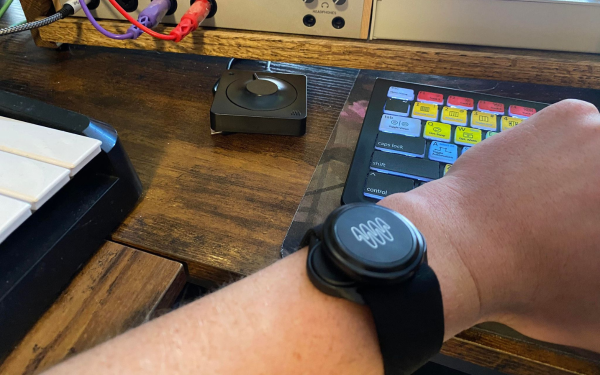
Simply put, the SOMI-1 is lightweight, comfortable, and aesthetically remarkable. The band is super lightweight, which is essential as you don’t want your wrist to feel any weight when going through the motions needed to get the most out of this device. The semi-stretchy band fits snugly and comfortably on the wrist, and I never once felt like it would get jostled around in the movement (which was a concern I had going into my review of this device).
And this look and feel extend beyond the band itself, as the hub that attaches to your computer is low-profile and comes in matching black matte coloration, which takes up little real estate on your studio desk or performance rig.
It’s Potential
I wanted to save this one for the last cause. I think this quality is the SOMI-1’s X-Factor here. The fact that it works with MIDI opens up a world of creative potential that I genuinely don’t think anyone has discovered yet. It’s one of the rare tools that are flexible enough and unique enough to allow users to apply it to their workflows however they need it to, and I could see it finding uses that far outreach the music-maker community.
The easiest one would be for VJs and other lighting operators to control light shows, trigger visual effects, and more in a far more intuitive and creative way. Why click in queues and activations when you could express and trigger them all fluidly using this type of device? Sure, the most prominent spectacle use-case of this would be in million-dollar clubs with LED walls. However, with recent technology like the visual synth from Imaginando, even smaller content creators, promoters, and more could use this technology create make for exciting experiences for their attendees and friends.
From a more personal perspective, I know my wife, an occupational therapist working with kids with ASD, was incredibly excited about the potential of the SOMI-1 with her patients. She often deals with children with sensory processing disorders and low motor functions, and tools like this are a powerhouse way to get the kids moving and interacting with space, noise, and movement. While I know this is a niche case anecdote that won’t pertain to most of our producer-based readership, it does show that the sky is the limit with a device like this.
What I Wasn’t Crazy About
There is no device and music creation machine that is perfect, and the SOMI-1 is not without its faults. And while the two things I have listed here might be obvious to some, it’s worth mentioning for those seriously considering whether this device is worth its €499,00 price tag.
It’s Not For Everyone
While this device is a MIDI controller, it’s an entirely different beast than A MIDI keyboard or Push 2, and I don’t think that every producer on the planet would need this device in their studio. It’s a performance tool and expressive MIDI affectation that might not be necessary for many music makers.
And while I have stressed throughout this review that one’s creativity is the biggest ceiling of this thing’s potential, I am not arguing that if you can’t find a use for this thing, you’re not a creative person. On the contrary! I am just saying that for those simply looking to make beats, write songs, and produce in the more conventional style – €499,00 might be better invested elsewhere.
It’s Got A Learning Curve
I learned early on in my production life while playing with a Thermin that these kinetically-operated instruments always take some getting used to, and the SOMI-1 is no exception. Learning how the movement operates, assigning parameters, and attuning your body, mind, and movement to how it works will take time. Full Stop.
And while I had mentioned that the presets undoubtedly help keep you excited to continue diving into the device, I highly recommend you set your expectations appropriately. The potential is high with this device, but it might take some artists and creators a fair amount of getting used to before you start getting the most out of this.
Final Thoughts
In conclusion, the SOMI-1 by Instruments of Things is a groundbreaking device that merges music and movement, offering a unique and immersive experience for users to express themselves creatively. Its potential applications stretch far beyond the traditional music industry, making it a versatile and innovative tool for various fields. With an appealing design, an array of exciting presets, and endless creative possibilities, the SOMI-1 pushes the boundaries of traditional music-making.
However, it’s important to recognize that this innovative technology might not be for everyone. The SOMI-1 comes with a learning curve that may deter some users, and its price tag may lead others to consider investing in more conventional music-making tools. Despite these drawbacks, the SOMI-1’s potential for transforming artistic expression and workflow is undeniable. It is a worthy addition to the toolkit of adventurous music-makers and creators seeking to explore new avenues of self-expression and creativity.
Learn More About It On The Company’s Website Here

Will Vance is a professional music producer who has been involved in the industry for the better part of a decade and has been the managing editor at Magnetic Magazine since mid-2022. In that time period, he has published thousands of articles on music production, industry think pieces and educational articles about the music industry. Over the last decade as a professional music producer, Will Vance has also ran multiple successful and highly respected record labels in the industry, including Where The Heart Is Records as well as having launched a new label with a focus on community through Magnetic Magazine. When not running these labels or producing his own music, Vance is likely writing for other top industry sites like Waves or the Hyperbits Masterclass or working on his upcoming book on mindfulness in music production. On the rare chance he's not thinking about music production, he's probably running a game of Dungeons and Dragons with his friends which he has been the dungeon master for for many years.