The music production world is abuzz with the arrival of the highly anticipated Ableton Push 3. This latest iteration of Ableton’s renowned hardware instrument has captured the attention of musicians and producers with its groundbreaking features and design enhancements. In this article, we’ll explore the top five most exciting aspects of the Push 3 that are set to revolutionize the way we create music.
From its expressive pad grid to its standalone capabilities, the Push 3 offers a range of innovative functionalities that empower artists to take their music production to new heights. So let’s dive into the five most exciting things that Push 3 is going to bring to the table that will change the game for music producers and the entire production community for years to come.
Redefining Push as an Instrument with Enhanced Design and Features
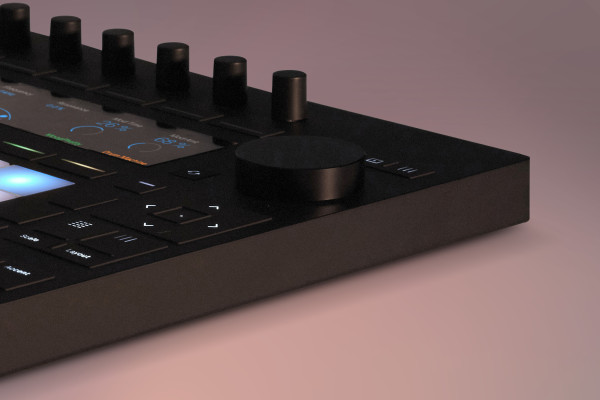
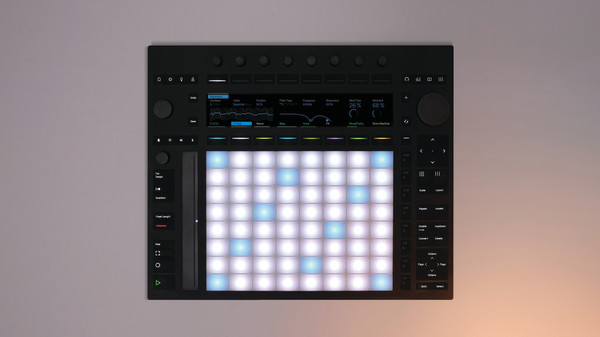
The Ableton Push series has been known as an “instrument,” and the new Push 3 lives up to that claim. This latest version boasts several design tweaks and new features that set it apart from its predecessors. One of its standout features is the updated pad grid, which now has multidimensional polyphonic expression (MPE) capabilities. This allows for a more versatile and expressive playing experience, with multiple levels of sensitivity registered per note. The pads now respond to polyphonic aftertouch and movement across the X and Y axes, enabling musicians to add bends, modulations, and intricate articulations to their performances.
In addition, the Push 3 is available in both controller and standalone configurations, providing users with greater flexibility. The standalone version has an onboard CPU, allowing Ableton Live to run within the hardware without needing a computer or power source. This empowers musicians to use Push independently, opening up new possibilities for performances, jam sessions, and on-the-go creativity. The Push 3 also has enhanced MIDI editing capabilities and a streamlined workflow, making it a valuable tool for musical production.
Streamlined Workflow and Enhanced MIDI Editing Capabilities

The Push 3 has undergone notable upgrades while still retaining the familiar design and layout of its predecessor, making it an easy transition for existing users. The new jog wheel, located at the top right of the interface, is a noticeable addition and doubles as a directional switch, enhancing browsing, triggering, and device navigation. The workflow remains largely unchanged from Push 2, ensuring a seamless experience for users. The central grid is still a versatile tool for triggering clips, step sequencing, and playing instruments in various scale modes. The buttons and touch-sensitive rotaries surrounding the screen allow users to add, edit, and perform with Live’s devices and third-party plugins.
The Push 3 introduces a significant workflow improvement by allowing the triggering of clips and scenes using the screen and navigational controls, in addition to the pad grid. This increased flexibility enables musicians to play an instrument and trigger clips simultaneously without sacrificing the expressive pads. The MIDI editing capabilities have also been enhanced with the introduction of a new Clip Edit mode. This mode provides a more detailed display of notes on the screen and allows for more precise adjustments using the jog wheel. These improvements streamline the music creation process and empower users to achieve their desired sound with greater precision.
Unleashing Expressive Possibilities with MPE Integration
The headline feature of the Push 3 is undoubtedly its expressive pads, which deliver on the promise of exceptional sensitivity. The multidimensional nature of these pads introduces several additional levels of sensitivity compared to Push 2, registering touch, polyphonic aftertouch, and movement across the X and Y axes on a per-note basis. Although the level of expressiveness is not entirely unique to Push, as MPE has gained popularity in recent years, Ableton has made MPE control incredibly accessible and easy to use on the Push 3, making it stand out in the market. The integration of MPE functionality with Push’s intuitive system of scales turns the device into an expressive playing surface with endless creative possibilities that even those with limited musical knowledge can effortlessly create expressive musical passages, thanks to the intuitive nature of the pads.
Moreover, the Push 3 offers a range of customization options that allow users to tailor the responsive behavior of the pads to their liking. Users can also route MPE messages to different parameters, providing further control over their sound. The device not only supports synth presets but also opens up intriguing possibilities with MPE-ready drums. The added dimensions of expression can make acoustic kits sound more realistic, while the X and Y axes can be used to manipulate pitch, filtering, and effects. With access to Ableton Live’s extensive feature set, users can create and customize their own MPE-format kits, unlocking even more expressive potential.
Standalone Mode for Unrestricted Music Production
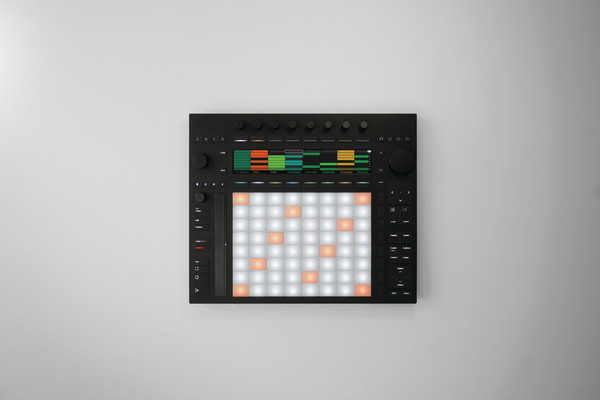
The Push 3 boasts an exceptional feature that allows musicians to use the device independently without relying on a computer. This standalone mode is made possible by an onboard CPU and battery that allows Live to run within the hardware without requiring any external power or computer connection. The device runs on a custom Linux OS and is equipped with an Intel i3 processor, 8GB of RAM, and a 256GB hard drive. One remarkable thing to note is that the Push 3 is designed to be upgradable, making it adaptable to future advancements by allowing users to replace various components.
In standalone mode, Push delivers the full Ableton Live experience, providing users with access to every native device, including instruments, audio and MIDI effects, and Max for Live devices. However, third-party plugins are not supported in this mode. Musicians can perform audio recording, sampling, warping, editing, and audio-to-MIDI conversions directly on the device. While the timeline-based Arrangement view is not available, Push’s focus on the clip/scene-based Session view ensures a streamlined and efficient workflow. The device has ample track counts for audio loops and plugins, although pushing the limits may cause performance to become sluggish.
The Push 3 offers seamless project transfer between standalone and desktop environments, which is a significant advantage. The device has Wi-Fi connectivity for authorization and the ability to download packs from Ableton accounts. When connected to the same network as a computer, Push appears in Live’s browser on the desktop, facilitating the transfer of sets, samples, and presets in both directions. While compatibility issues may arise with third-party plugins, freezing tracks with these plugins enables their import as audio clips. Some challenges remain, such as transferring Drum Racks and sample-based presets, but Ableton is actively addressing them.
Expanded Connectivity and a Solid Build
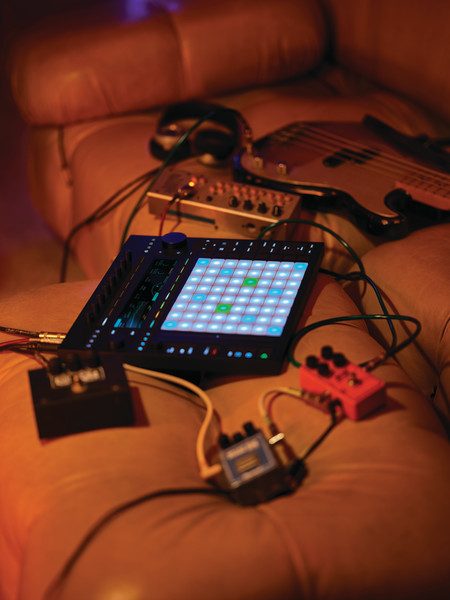
The Push 3 is equipped with various inputs and outputs that take advantage of its enhanced audio interface capabilities. Alongside the pre-existing pedal inputs, the device features two pre-amp equipped jack inputs, two main outputs, and two assignable monitor/headphone outs. Notably, including ADAT in and out ports allows for expanding up to 10 inputs and 12 outputs, making it possible to record small band sessions with Push standalone. MIDI in and out ports are also present, although adapters for the mini-jack ports are not included.
Regarding physical connectivity, the Push 3 offers two USB ports: one USB-C port for tethered use and an additional USB port for connecting MIDI controllers. The pedal inputs from Push 2 are retained, serving dual purposes as stereo CV outputs. This feature enables Push to output up to four CV signals using a stereo splitter, expanding its capabilities as a control interface for external modular gear.
Conclusion: A Game-Changing Instrument and Standalone Workhorse
The Ableton Push 3 is an exceptional musical instrument that surpasses its predecessors in terms of expressive capabilities. Its sleek design, improved pads, and seamless integration with Ableton Live make it a powerful music production tool, whether used as a controller or in standalone mode. The Push 3’s incorporation of MPE control, along with its intuitive scale system, creates a user-friendly yet dynamic platform for crafting emotive musical passages. The standalone mode unleashes the device’s full potential, providing the complete Ableton Live experience without requiring a computer, making it perfect for live performers and anyone in need of a portable music production solution.
Although both configurations come with Live Intro instead of the complete version of Ableton Live, the upcoming upgrade kits offer a simple way to unlock the device’s full potential. With its broad range of connectivity options and sturdy construction, the Push 3 is an adaptable control interface and standalone workhorse suited for musicians and producers alike.

Will Vance is a professional music producer who has been involved in the industry for the better part of a decade and has been the managing editor at Magnetic Magazine since mid-2022. In that time period, he has published thousands of articles on music production, industry think pieces and educational articles about the music industry. Over the last decade as a professional music producer, Will Vance has also ran multiple successful and highly respected record labels in the industry, including Where The Heart Is Records as well as having launched a new label with a focus on community through Magnetic Magazine. When not running these labels or producing his own music, Vance is likely writing for other top industry sites like Waves or the Hyperbits Masterclass or working on his upcoming book on mindfulness in music production. On the rare chance he's not thinking about music production, he's probably running a game of Dungeons and Dragons with his friends which he has been the dungeon master for for many years.