We were interviewing Jeff Mills a while back from Berlin about his new project Exhibitionist 2 and during the interview, we got to the topic of Detroit. The question that we asked was simple, are you going to come back to the USA to tour the project?
There was a brief pause, and Jeff Mills said rather sadly
There was a brief awkward silence as we thought, how can that be?
Here we have a musical movement that globally has had just as much or more cultural impact as Motown and its foundations and founders are being forgotten. Almost no one in the United States has any idea about the significance of the music that we brought to the rest of the world, and that includes the huge crop of new fans that are driving it forward today.
How is it that Electronic Music has not been recognized in the history books like Jazz, it’s had the same impact? Detroit Techno and Chicago house music have had an enormous effect on the entire world yet the guys that created it had to move away to Europe to make a living. As Disco died, house and techno flourished and Europe embraced our forgotten culture as Americans turned our ears to rock and hip hop.
Listen to the Jeff Mills interview Here
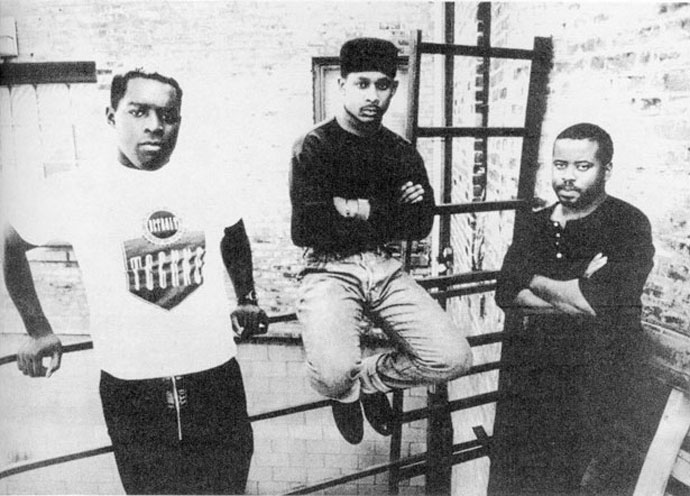
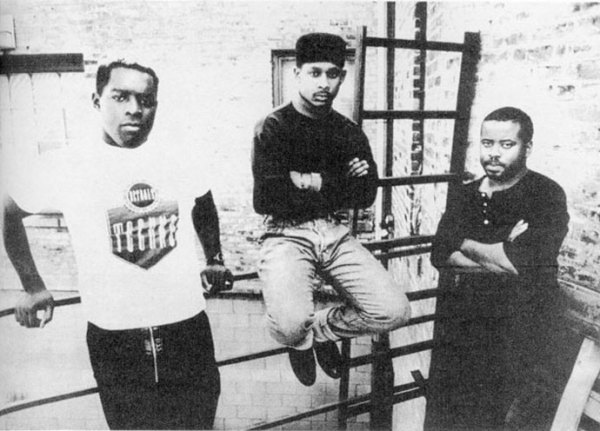
Pioneers like Jeff Mills, Juan Atkins, Eddie Fowlkes, Kevin Saunderson, Derrick May, Carl Craig, Stacy Pullen, Louie Vega, Kenny Dope, Joe Claussell, Derrick Carter, Farley “Jackmaster” Funk, Steve “Silk” Hurley, Larry Heard, etc. are forgotten? (+ MANY more)
Who Pioneered House Music?
Regarded as one of the best underground DJs still currently touring, Derrick Carter has tour, produced, and worked with some of the biggest players and on the biggest stages of the world.
But you might not know it.
Because Derrick rarely gives extensive interviews, preferring to keep a low profile since his early rise to fam in the Chicago house scene in the 80s.
This banger of a collaboration from SLUMBERJACK and Memba will make you drop it low. Musically, it is straightforward, which is why the groove work and sound selection stands out so much.
The song feels fresh, fun, and approachable from the moment you hit play, until it finishes and you run it back.
Most well recognized for producing someo f the most iconic house tracks throughout the 80s, Farley Funk was a pioneer of both the classic Chicago house sound alongside the Acid House genre.
Having got his start in the early 80s in Chicago, his career has spanned over three decades and he is still actively playing and touring, championing the classic sounds of the genre he helped build.
Pure and simple, Blow by Lookas will set off any set. The track is straightforward and shines in all of its effort. Nothing is too much, and nothing is too little. A masterclass in how to keep a simple idea fresh, on fire, and alive throughout a song.
Virtual Riot takes the rapid rising talent and genre blender in underscores, and flips Everybody’s Dead into something completely brand new. It brings hyperpop, with happy hardcore flare, with the tried and true Virtual Riot sound.
The song retains some of the subtle punk sound of the origin with sound design meant for a festival stage. This track is fun, bubbly, heavy, and full.
Perhaps the most eclectic song on this chart, Ethereal Dreams by Malixe runs full speed into exploring what someone can accomplish with fluttering, glitchy, bass music that remains disciplined in its arrangement and concept.
A quintessential wave track, Heimanu and Sublab bring us Numb, an atmospheric and melodic piece carried by a melancholy vocal that puts us in the song’s emotional headspace. This is a track to just put on and lose yourself to.
Squeals, white noise, and larger than life sub kicks, this glitchy and aggressive track from lord genmu delivers us head bopping sway thats infectious.
It’s a showcase of what well created tonal drums and groove switches can do to a track, and how far it can take a core idea.
Electronic Dance Music today, unfortunately, is a genre that suffers from a “here today, gone tomorrow” syndrome and has become disposable to most new fans. There is so much EDM / Electronic Music being released that it’s impossible to keep up, and sub-genres are born and die within months, a blip in the ever-changing landscape.
See How EDM Eats Itself Here
It’s kind of ironic that technology is now partially responsible for helping to erase the very music that it helped create. Electronic music wasn’t always that way, and the stories and music of the past remain an important reference point, while today’s music dissolves like an Alka Seltzer tablet.
Where Did Dance Music Start?
Americans invented techno and house and yet 90% of new fans have no clue about our rich history in helping bring this music to the world? Most kids that pick up a guitar or other musical instrument tend to at least have some sort of historical reference point in relation to the music that they are learning to play, even it’s not that far back in time, there is some historical reference even if it’s from the last fifteen years.
Why is it a kid that wants to make dance music couldn’t care less about the roots? Even more importantly, what are we losing from a historical perspective as new fans and artists pave over this incredible piece of America’s musical history?
Maybe it’s just the nature of the genre; it moves so quickly, and much of it is only temporary before being forgotten in a flurry of new tracks (60,000 more a week hit the market accordingly to recent Spotify metrics in 2022). It’s almost like graffiti; it’s there and then it’s forgotten. That’s excusable on some level, but ultimately we have an important history that we should try to preserve and respect.
Studying The History Of Dance Music
We will do our best to preserve the history of electronic music with Magnetic Magazine because talk is cheap and forgetting these stories is tragic.
If you are a new fan of this genre, you owe it to yourself to dig a couple of levels deeper. The history of the music that we can indeed call “American Music” in many respects is fascinating.
Forward-thinking future music was evolving from the inner cities of Detroit, Chicago, and New York. Much like Hip Hop, there is a troubled past that leads to a game-changing future. A future that you are now enjoying as electronic music fans, and where a crop of new talent is standing on the shoulders of giants. We are ready for the giants to start making some noise again; it’s about time we took another look and listen to our illustrious history in this genre.
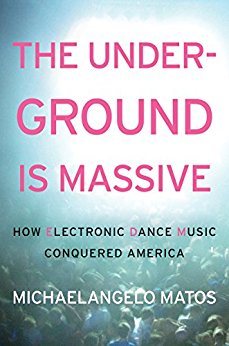
A great reference guide is a book called The Underground Is Massive by Michaelangelo Matos
This is a detailed account of the beginning of it all and the key figures that helped make electronic music what it is today
You can score it here. If you are even remotely interested in the history of electronic music, this book is a key starting point.
Dig deeper, you will be rewarded. Trust us.
By Magnetic
Magnetic byline note: This byline is used for staff produced updates and short announcements, often based on press materials and official release information.
Editorial responsibility: David Ireland (Editor in Chief) and Will Vance (Managing Editor).
About: https://magneticmag.com/about/
Masthead: https://magneticmag.com/masthead/
Contact: https://magneticmag.com/contact/
















![How It Was Made: Low Steppa & Roel – Dreamliner [Low Trax]](https://magneticmag.com/wp-content/uploads/2026/09/DSC07195.jpg)


![How It Was Made: Low Steppa & Roel – Dreamliner [Low Trax]](https://magneticmag.com/wp-content/uploads/2026/09/DSC07195-1024x608.jpg)


