Earlier this week we got our hands on the PC demo build of Unholy, which was served up Neapolitan style and showcased three distinct areas of the game. Each section gave us a peak at the real world, the in-between, and the Unholy world respectively.
The Real World
It goes without saying that the ‘real world’ doesn’t need much of an introduction, however the game takes place in a post-soviet era city that is home to an oppressive priest caste. You’ll be filling the shoes of Dorothea, a mother who’s in denial over her son Gabriel’s death. Seemingly, she’s quite convinced that something is awry while the rest of her neighbors have written everything off as a tragic accident. Outside of her apartment block in the courtyard the priest caste have set up memorial stations for Dorothea and the community to mourn the loss of her son. Unsurprisingly, she’s not having any of it, and this is where the first section of the demo begins.
The first thing I noticed while starting the demo was how well the game looked. Environmental assets look incredibly detailed in most cases for both the courtyard and inside the apartment block. Trees and vegetation rock back and forth slowly in the breeze alongside pleasant lighting effects that filter through the leaves. Indoor assets have the same level of quality where you can see each individual scratch on the kitchen floor or how nicely the apartment’s clutter looks as a whole.
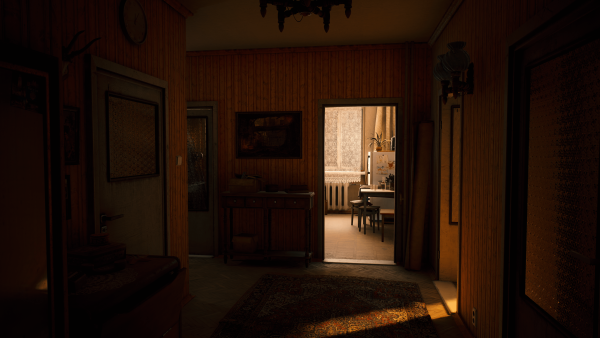
However, there are a few instances where character models don’t quite hold up to the same level of detail as their counterparts, particularly where character animation is concerned. The developers have let us know ahead of time about various aspects of the game that are still a work in progress or placeholders as development of Unholy continues on.
As far as character movement goes, it feels spot on for the horror genre. With a tight and claustrophobic FOV and a weightiness to panning the camera around in first person, Unholy makes you feel wholly vulnerable. While this is commonplace for the genre, it seems like a particular design decision was made here as Unholy doesn’t seem to rely on combat as much as it does its atmosphere and storytelling. This being said there is a fair amount of interactivity with items in the world, whether this be putting vinyl on a record player, tuning an old tv to gain reception, or finding collectibles or notes hidden throughout the game.
The In-Between
The second section of our preview gave us a quick taste of the ‘in-between’ which I can best describe as similar to that of Stranger Things’ upside down. Everything that you’ve seen before in the soviet-era town is familiar, but darker, weirder, and more broken down. This was the shortest section of the preview but one of my favorite parts of Unholy. I hope we get to see more of the in-between as we get closer to the game’s full release.

The Unholy World
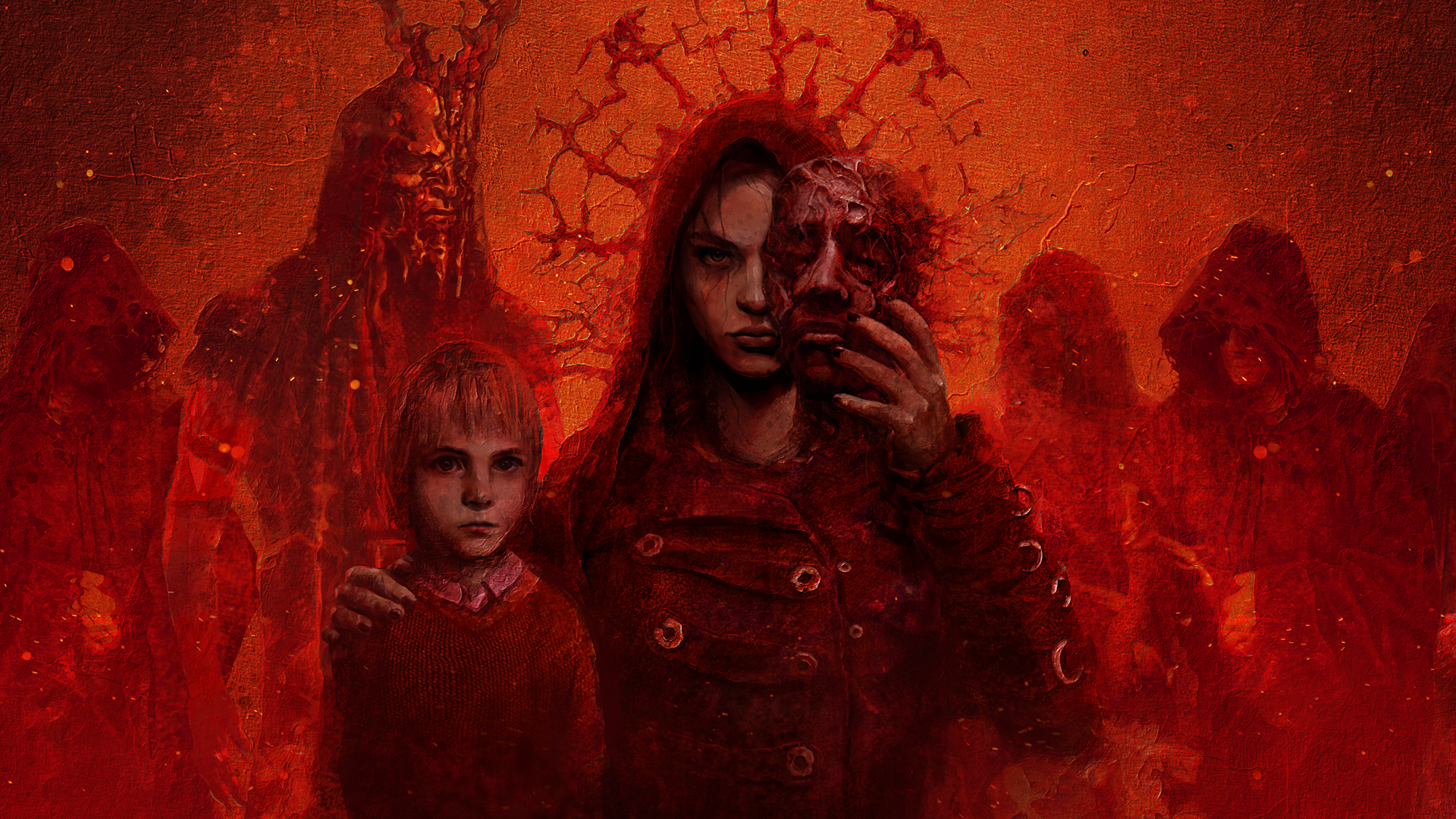
Wrapping up our preview was the final segment, the Unholy world. If you recall the ‘in-between’ and the oppressive priest caste from earlier, the Unholy world is the deranged steroid version of that. The soviet-era town is nearly unrecognizable and overgrown both environmentally and ideologically. Subway tunnels are infested with either tentacles or slithering tree branches, both of which I’m unsure of. Human figures litter the area looking frozen in time as if from the remnants of Pompeii. Worst of all, the ideologies of the priest caste have gone and turned the city into a full-blown dystopian hell scape. The visual fidelity continues to impress in the Unholy world alongside the art direction that helps push the narrative forward. Citizens are being sacrificed in the streets while others patrol the area with unique and elaborate masks that seem to vary depending on each individual’s specific role. It’s here in the Unholy world where the meat of the demo resides.
Dorothea now with a mask of her own is a mother on a mission to find her ‘dead’ son and find out what the hell is going on in the Unholy world. Exploration and puzzle solving work hand-in-hand to progress through environments. Finding additional masks will yield various abilities, such as allowing Dorothea to scan the environment for interactable items to help problem solve puzzles, for example. In conjunction with the masks is her son’s slingshot which once entering the Unholy world transforms into something a bit more useful.
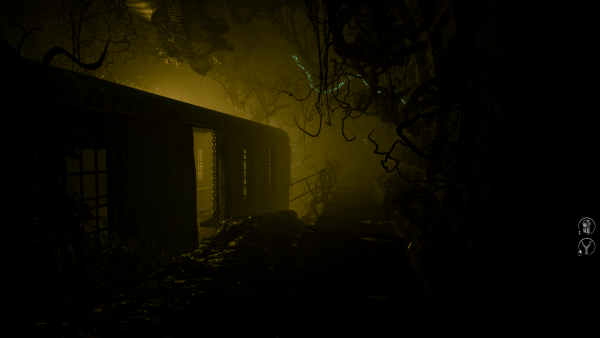
With the slingshot Dorothea can use four different emotions; anger, fear, sadness, and desire to interact with the environment further. This includes fending off or escaping the enemies of the Unholy world with sadness that creates a smoke cloud or anger which creates an electric shock. During the demo I was able to find these two emotions and the one additional mask to add to Dorothea’s arsenal to aid in surviving the Unholy world.
Unholy is a slated to launch later this year and the developers have decided to partition these three areas of the game to prevent spoiling too much of the story while also giving us a look at what’s on display. Each section took me about 15 minutes or so to complete to round out the experience at just under an hour. As someone who scares easily when it comes to horror games, this experience didn’t make me pace around the living room before returning to the inevitable that lie in wait. However, it must be made clear that all segments of the demo were from various parts of the game, all which were short experiences. This didn’t allow for quite enough time for continuous chronological storytelling and setup to make my heart race like most horror experience do. Regardless, I’m excited to see what Unholy has in store for us later this year as the first ‘mom horror’ game. Don’t mess with Dorothea.