
Producing electronic music offers limitless creative freedom; you can include any elements you desire. However, the challenge lies in creating unheard sounds, especially when everyone can access the same synths, plugins, and samples. So, how can you achieve a unique and exciting sound?
One solution is granular synthesizers, a powerful tool for creating otherworldly and ambient sounds to enrich your music. If you’re unfamiliar with granular synthesis, I recommend starting with the FAQ section below, then returning here. Granular synthesis is the secret sauce for extracting ‘more from less’ and adding extreme detail to your music. I will showcase specific uses and examples from my productions to demonstrate how to maximize the potential of granular synthesis. Furthermore, this article will explore the best plugins and systems employing granular synthesis to transform sound, texture, and overall production vibe.
So, let’s dive in!
Crystallizer
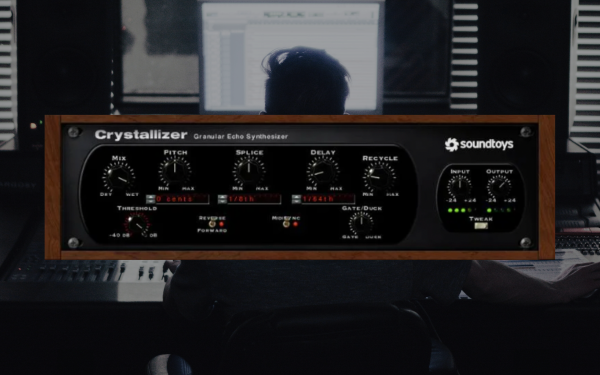
At its core, this plugin presents an innovative synthesis approach, creating unique sonic textures that reverberate with the sparkling quality of a thousand crystals. Its innovative features like chorus, delays, reverse, and harmonizer help build a unique ambient texture, almost like spreading upper harmonic fairy dust across your tracks. Its singular tone makes it a captivating tool for spaces where some novel tonal infusion is desired, while the distinct auditory signature calls for careful and restrained usage to prevent over-saturation.
Implementing reverse echo in the plugin allows for a depth of sound manipulation that offers a compelling addition to the producer’s toolkit. From producing the shimmering fizzles of brass to turning synths and samples into a distinct crystallized melody, the plugin’s versatility shines. While the plugin can produce some incredibly unique and front-facing FXs, it’s at its best when used with a subtler hand and a more nuanced approach. You can hear taste amounts of the plugin’s default setting, which applies just a tiny amount of reversed and granular echo to the sound, all over my track ‘Algebra of Contentedness.’ I place it after my more primary delays so that the reversed effect tickles the ear drums and livens up the more conventional delays!
Plugin’s X-Factors Are:
- Unique Sonic Textures: The plugin provides a distinct auditory experience that is hard to replicate, with its ability to turn sound into a crystalline texture. It allows producers to create innovative ambient textures, adding a unique character to their electronic compositions.
- Versatile Sound Manipulation: With features like reverse echo, the plugin allows for extensive sound manipulation, enabling users to experiment and create many effects. Its capacity to transform and create captivating sonic environments makes it stand out among other granular synth plugins.
Learn More About This Plugin While Supporting Our Team Of Writers Through Our Affiliate Partnership With Sweetwater Here
Omnisphere
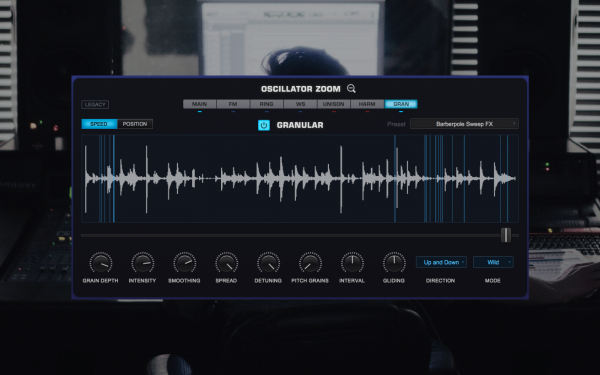
Known for its robust sound generation, its granular synthesis feature is often overlooked. While it may not be its central strength, this granular feature, combined with the possibilities of the 4-oscillators shared path, adds an extra dimension to the synth’s potential. Users have found that this granular synthesis provides a beautiful supplement to the main strengths of Omnisphere, helping it to stand out among heavyweight synths.
When you factor in Omnisphere’s extensive multi-sample library, which can be utilized with the granular feature, the synth’s utility multiplies, making it a valuable tool in any producer’s arsenal. Furthermore, it’s reported that the synth works exceptionally well even without extensive tutorial support online. I tend to use Omnisphere’s granular synth to turn samples already inherent in the mix, like vocals or melodic samples from Loopcloud, into textural soundbeds and detailed atmospheric elements that help the sample sink into the composition a bit more than just dragging and dropping it into the time. You can hear these subtle details applied to the vocal sample in my track “At Least We’re Safe.’
Omnisphere’s X-Factors Are:
- Multidimensional Utility: With the integration of granular synthesis, Omnisphere can generate a wide range of sounds – from simple, traditional waveforms to complex, evolving textures. Its 4-oscillators shared path combined with the granular synthesis feature provides a versatile tool for creating unique, layered sounds.
- Extensive Multi-Sample Library: Apart from its granular synthesis feature, Omnisphere stands out because of its vast multi-sample library. This extensive library gives producers an impressive array of sounds to experiment with, significantly increasing its overall utility and the range of sounds that can be produced.
Learn More About This Plugin While Supporting Our Team Of Writers Through Our Affiliate Partnership With Sweetwater Here
FRMS – Granular Synthesizer

Emerging from the forward-thinking Portuguese developers, Imaginando comes an innovative plugin that masterfully interweaves granular, subtractive, and FM synthesis into one comprehensive tool. With FRMS, the musician is endowed with four operational layers, each able to perform as either a subtractive or granular synthesizer. Its strength lies in the granular mode, a captivating feature that extracts small sections from a pre-existing waveform processes them, and reconnects the segments to create an entirely new waveform.
The result?
An incredibly diverse array of unique waveforms derived from a single source. FRMS doesn’t stop there; it provides an expansive library of roughly 150 waveforms, ranging from pure instrument recordings to abstract sounds, and even allows users to introduce their own audio files into the mix.
FRMS stands out as a highly adaptable tool capable of generating various sounds. Each layer is outfitted with a multimode filter and two ADSR envelope generators, further adding to the immense creative potential. The final global section seamlessly combines the outputs of all layers, resulting in either a simple mix or, for the more adventurous, an option to enable FRMS’s FM synth mode. This feature treats each layer output as an FM operator, encouraging the generation of novel overtones and timbres. Despite its sophistication, the interface is refreshingly intuitive, making patch creation and editing an incredibly straightforward.
FRMS’s X-Factors Are:
- Flexible User Interface: One of FRMS’s unique strengths is its user-friendly, flexible interface. While it hosts three complex synth engines, the editing areas are designed to simplify navigation and parameter adjustment. The layout allows simultaneous work on the same panel from different layers or different panels from the same layer, making the process of patch creation and editing incredibly accessible.
- Granular Synthesis Capabilities: FRMS’s impressive granular synthesis capabilities give the plugin an undeniable edge. Users can produce an almost infinite waveform from a single source, opening up limitless creative possibilities. With FRMS’s extensive library of around 150 waveforms and the option to use personal audio files, the granular engine offers tremendous scope for experimentation and innovation.
Learn More About This Plugin While Supporting Our Team Of Writers Through Our Affiliate Partnership With Plugin Boutique Here
Graindad
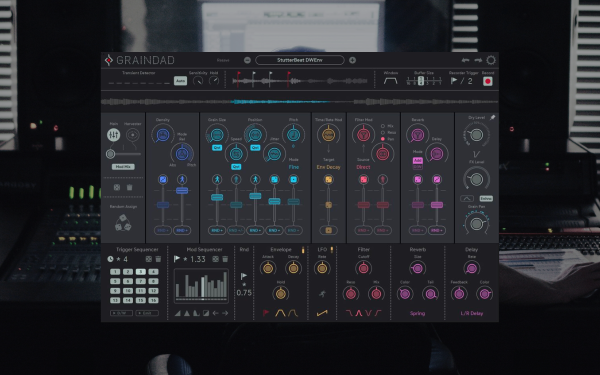
The Berlin-based Sugar Bytes introduces Graindad, a powerful granular effects plugin for audio professionals yearning for fresh sonic explorations. Graindad goes beyond traditional granular synthesis with its ability to simultaneously manipulate and layer up to 64 grains in uniquely creative ways. The plugin’s engine boasts 12 main parameters, providing an extensive toolkit for experimentation—looping, stuttering, time stretching, glitch, pitch shifting, reversing, harmonizing, and more. Whether manipulating existing audio files or processing live audio, the synchronizable recording capability, or direct MIDI triggering, gives users unprecedented control.
Graindad’s standout feature, the Harvester Modulation engine, redefines parameter modulation. Think of it as a field with scattered parameters, with the Harvester capturing them at different points. You can even draw paths for the Harvester to follow, enabling simultaneous modulation of multiple parameters. The plugin has an integrated multi-effects engine to enrich the sonic palette further, offering everything from multimode filters to reverbs, shimmer, delays, flangers, and choruses. The versatility of Graindad, paired with its innovative design and ease of use, places it in a league of its own for those seeking new dimensions of sound design in electronic music production.
Graindad’s X-Factors Are:
- Harvester Modulation Engine: A novel modulation system that simultaneously modulates all 12 main controls. It captures parameters scattered across a field, and paths can be custom-drawn to modulate several parameters simultaneously.
- Multifaceted Granular Engine: Capable of layering up to 64 grains simultaneously in diverse ways, it offers broad manipulation options, from looping and stuttering to time stretching, pitch shifting, and beyond. Additionally, it provides real-time processing with live audio or manipulation of existing audio files.
Learn More About This Plugin While Supporting Our Team Of Writers Through Our Affiliate Partnership With Plugin Boutique Here
Albedo
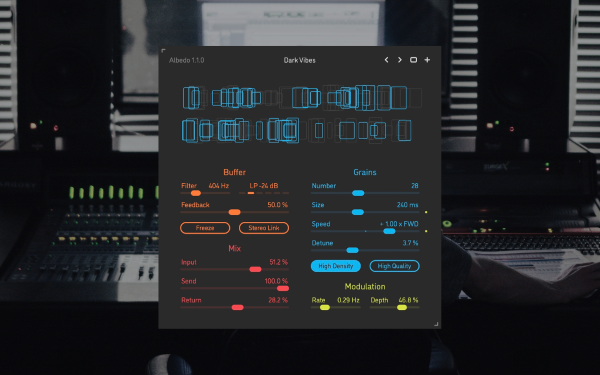
Albedo’s unique algorithm consistently records incoming audio into a buffer, triggering a granular processor that can operate up to 64 individual looping played simultaneously and scatter them within the buffer. The grains have their random size and position, generating a lush “cloud of sound” effect. Moreover, the dual envelope generators per grain enable seamless transitions between forward and reverse playback speeds. This feature unlocks the potential to craft extensive reverbs, tape machines, turntable-like audio manipulations, and much more.
Albedo’s versatility extends to creating melting pitch shifts, chaotic reversed delays, chorus atmospheres, and dark, grimy dissonance. An additional feature to freeze the Albedo buffer allows the granular cloud to continue indefinitely, paving the way for layered performances atop the original input signal. This granular cloud reverb plugin is an alluring option for electronic music producers seeking transformative sound manipulation capabilities, especially those fond of ambient soundscapes. Albedo’s unique features and affordability make it an appealing addition to the digital audio toolbox.
Albedo’s X-Factors Are:
- Granular Cloud Reverb: A unique algorithm that allows up to 64 individual looping play heads to run simultaneously, creating lush and intricate “clouds of sound” for rich and dense reverberations.
- Freeze Function: Albedo’s ability to freeze its buffer enables the granular cloud to persist indefinitely, providing the option to layer performances atop the original input signal, enhancing its potential as a live performance tool.
Learn More About This Plugin While Supporting Our Team Of Writers Through Our Affiliate Partnership With Plugin Boutique Here
Portal
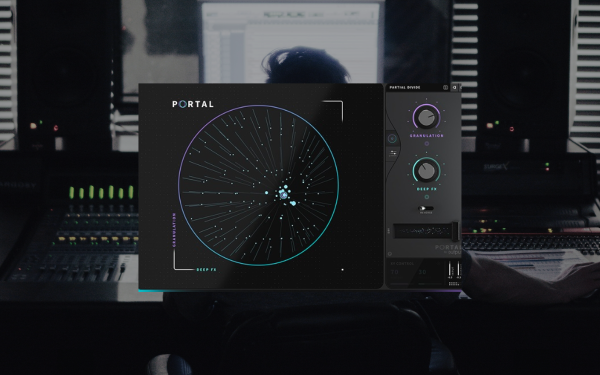
The plugin boasts an aesthetically pleasing GUI that is both efficient and beautifully animated, where users can easily manipulate Macro controllers, reverse playback, and adjust input and output levels. The heart of Portal lies within its Grain Controls section, which allows users to manipulate the granular engine that slices incoming signals into ‘grains.’ Here, you can generate up to 16 grains and adjust their sampling rate, pitch, length, panning, and envelope. Coupled with Portal’s Grain Delay section, the plugin enables users to produce various audio outputs, from choppy to ‘smeared’ sounds.
Moreover, Portal’s well-tuned granular synthesis engine, comprehensive effects, and robust modulation system offer a powerful tool for any music producer. Although many granular effects aim to transform the input signal wholly, Portal’s approach is more calculated and musical, offering various rhythmic, tonal, harmonic, spatial, distorted, and glitching treatments that work exceptionally well with non-percussive instruments and vocals.
Portal’s X-Factors Are:
- In-depth Grain Controls: Portal’s comprehensive grain manipulation offers up to 16 grains generated at a time, each adjustable in sampling rate, pitch, length, panning, and envelope, allowing for many sound production options.
- Modulation System: The robust modulation system combined with the plugin’s granular synthesis engine and effects sections form a powerful tool, offering detailed mixing at all points between input and output, enhancing the creative possibilities for music producers.
Learn More About This Plugin While Supporting Our Team Of Writers Through Our Affiliate Partnership With Plugin Boutique Here
Efx FRAGMENTS
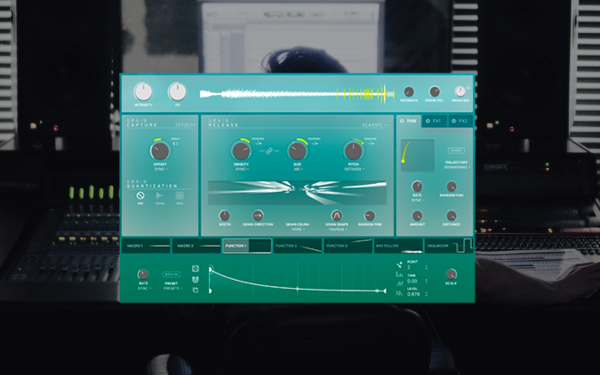
Arturia’s Efx Fragments emerges as a game-changer in the field of granular effects processors. Exhibiting Arturia’s propensity for vintage emulations, this unique plugin shines as a user-friendly option for granular synthesis. Fragments are designed with two viewing modes – Standard and Advanced, each providing control over Grain Capture and Grain Release. In the Grain Capture section, the virtual playhead scans through the audio buffer, allowing adjustments to speed and ‘spray,’ which randomizes the grain collection around the playhead position. The Grain Release section facilitates audio playback through Classic, Texture, and Rhythmic modes, each specializing in unique aspects of granular synthesis like standard granular synthesis, creating ambient-friendly ‘grain clouds’, and glitch-like results, respectively.
The plugin also includes a comprehensive three-part effects section for controlling the pan distribution of grains and offering additional multi-effect slots. Arturia’s Efx Fragments does not skimp on the intricacies of sound design, providing a balance between depth and accessibility, offering sound-shaping options from glitchy sequenced effects to uncanny glossy reverbs and wide churning modulation. The modulation tools echo the well-designed routing setup in Arturia’s Pigments synth, allowing users to set up macro controls and route modulation from multiple function generators and sequencers.
Efx Fragments’ X-Factors Are:
- User-Friendly Modes: With both Standard and Advanced modes, Efx Fragments is designed to cater to a wide range of user expertise, making it accessible to beginners while offering a depth of control for seasoned users.
- Comprehensive Modulation Tools: Efx Fragments stands out with its extensive modulation tools, reminiscent of Arturia’s well-crafted Pigments synth. This enables users to set up macro controls and route modulation from various function generators and sequencers, fostering creativity and versatility in sound design.
Learn More About This Plugin While Supporting Our Team Of Writers Through Our Affiliate Partnership With Plugin Boutique Here
Density

This plugin’s engine is constructed on the principles of granular synthesis and particles and is organized into three operation modes: Basic, Detune, and Multipitch. Each mode progressively offers more features than the previous one, from generating ensembles in Basic mode to adjusting detune and voice numbers in Detune mode. The plugin notably supports multiple multi-channel audio input/output formats, including binaural, various ‘.1’ channel counts, and Ambisonics. This ensures compatibility with spatial audio environments, allowing for versatile sound layer placement.
Density’s Multipitch mode is particularly robust, creating up to eight harmony parts based on the original audio input. This mode provides individual Gain, Voice Number, and Pitch settings for each generated voice set. While some improvements can be made, such as scale-aware harmony generation, the quality of the pitch-shifted audio remains remarkable. In its entirety, Density is an innovative tool that can efficiently simulate ensemble performances from single audio sources, making it an impressive option for electronic music producers looking for granular synths and granular-based plugins.
Density’s X-Factors Are:
- Multi-Channel Support: Density stands out with its multi-channel support, accommodating numerous audio input/output formats. This makes it versatile for different production environments, especially those using spatial audio.
- Operational Modes: With three unique operational modes, Density provides extensive features and flexibility. This allows users to customize their sound based on their needs, from basic harmonies to sophisticated pitch adjustments and voice generation.
Learn More About This Plugin While Supporting Our Team Of Writers Through Our Affiliate Partnership With Plugin Boutique Here
FAQs
What does a granular synth do?
At its core, granular synthesis is a method that uses small elements of an audio file, known as grains, to generate sounds. This technique is similar to the time-stretching abilities in most digital audio workstations (DAWs), where it loops these tiny portions of an audio file to allow each grain to be sustained without altering the pitch. Granular synthesis contrasts with wavetable synthesis, which builds sounds by stacking multiple waveforms and transitioning between them. On the other hand, granular synthesis deconstructs a sample into fragments, offering more creative possibilities by breaking it down rather than multiplying. This technique thrives with modulation and variation, typically involving changes to the grains’ position, length, or pitch to add diversity to a sound patch.
The effects produced by granular synthesis greatly depend on the source material. With a sample containing a broad range of timbral variety, outcomes can range from the ethereal to the glitchy. One frequently used method involves simultaneously playing back numerous grains from a source sample, generating a ‘grain cloud’ effect that can yield ‘fluffy’, ambient tones. Randomization is a significant aspect of granular synths, creating captivating effects through subtle and pronounced unpredictable changes. Granular synthesis is distinctly digital, excelling at creating complex, otherworldly sounds. As it relies heavily on source sound, the possibilities for granular synthesis are extensive, especially when exploring personal collections, experimenting with vocal samples, or resampling different instruments. The popularity of granular synthesis within the modular synthesis world underscores its potential for resampling and randomization.
Does Logic have a granular synth?
Yes, Logic Pro does have a granular synth called Alchemy. It presents continuous sound as a stream of grains or small fragments of sound by extracting 2- to 230-millisecond pieces from an audio file. Each grain’s amplitude, pitch, and pan are shaped before the grain is sent to the output stream. Grains can be reordered, time-stretched, and pitch-shifted, offering vast potential raw material for sound creation. Alchemy’s granular synthesis feature can only be used when an audio sample is imported in either granular or sampler mode, and it’s essential to note that the sampler and granular engines can’t be used together within a single source.
Alchemy provides a series of granular element controls to fine-tune the sound generated. These include volume, grain size, density, and various other factors. The size and density parameters interact, determining the duration and the number of overlapping grains. Different settings of these parameters can result in different types of sounds. Other notable features include the RTime knob, which adds a small random offset to grain extraction positions in the sample, and the RPan knob, which adds a random offset to the stereo position of each grain. Also, the Grain Shape menu allows you to choose the envelope shape applied to each grain. The chosen grain shape can significantly or subtly impact sonic artifacts that may be introduced in the stream of grains. Alchemy offers a comprehensive set of granular synthesis capabilities within Logic Pro.
Does Ableton have a granular synth?
Indeed, Ableton Live does have a granular synth, specifically a Max for Live granular synthesis device known as Granulator II. Granular synthesis is a method of sample-based synthesis that operates on minuscule parts of sound, generally 1 to 100 ms in duration, known as grains. These grains can be layered, looped at various speeds and densities, time-stretched, randomly reordered, and scattered, among other possible manipulations. The essential concept of granular synthesis is that any sound is an assemblage of numerous fundamental sounds which can be fragmented into tiny parts. Granular synthesizers often incorporate elements of other types of synthesis and digital signal processing effects, making them excellent for creating otherworldly soundscapes and sonic textures.
The Granulator II in Ableton Live is attributed to Robert Henke, generating a continuous stream of short, crossfading sections of the source sample. Each grain’s pitch, position, and volume can be modulated in several ways to produce a wide range of exciting sounds. Granulator II also includes two multimode filters in series to tailor the resulting timbre further. This granular synthesizer’s ability to fragment and reconstruct audio into intricate textures makes it a powerful tool for sound design within Ableton Live.
Check It Out Here
What is the difference between granular synthesis and wavetable?
Granular and wavetable syntheses are two different sound synthesis methods, each with unique features and applications. Granular synthesis divides a sound or sample into tiny segments known as grains. These grains, which can be as short as 1 millisecond or as long as 100 milliseconds, are then individually manipulated, processed with effects, warped, and more. This allows for the creation of entirely new sounds from the original sample. The final tone of the granular result heavily relies on the timbre of the original sample. An array of these chopped samples is referred to as the grain table, and when played in chronological order at the speed of the original sample, it recreates the sound of the original sample. Granular synthesis is particularly effective when randomization creates dynamic, ear-catching sounds and effects.
On the other hand, wavetable synthesis is based on creating complex waveforms by blending simpler ones, known as subtables. This blending is achieved through smooth modulation, resulting in the morphing of the sound in a fluid manner. Although granular synthesis shares the principle of dividing audio into small pieces for manipulation, like wavetable synthesis, they differ significantly in their approach to sound manipulation. In contrast to the randomized granular synthesis approach, wavetable synthesis works best with smooth, fluid modulation for the morphing of sounds. Ultimately, both methods provide unique ways to generate and manipulate sounds, with granular synthesis excelling in creating new sounds from old ones and wavetable synthesis excelling in crafting complex sounds by combining simpler ones.

Will Vance is a professional music producer who has been involved in the industry for the better part of a decade and has been the managing editor at Magnetic Magazine since mid-2022. In that time period, he has published thousands of articles on music production, industry think pieces and educational articles about the music industry. Over the last decade as a professional music producer, Will Vance has also ran multiple successful and highly respected record labels in the industry, including Where The Heart Is Records as well as having launched a new label with a focus on community through Magnetic Magazine. When not running these labels or producing his own music, Vance is likely writing for other top industry sites like Waves or the Hyperbits Masterclass or working on his upcoming book on mindfulness in music production. On the rare chance he's not thinking about music production, he's probably running a game of Dungeons and Dragons with his friends which he has been the dungeon master for for many years.