Music production and DJing alike have been accessible enough to the masses for a long enough time that those who have partaken in such activities are finally seeing the amount of enjoyment in the respective crafts catch up to them. The ones hit the hardest by this are dance music lovers who attended far too many raves without earplugs and who are now seeing how much damage humping the subs finally does to your ear drums – not pointing fingers here; we’ve just covered enough festivals to know that it’s a thing.
And all jokes aside, DJs and would-be producers face serious challenges once they start experiencing tinnitus. And the fact that the damage you did to your ears in your twenties often doesn’t show until your late thirties makes it even more disheartening as these same ones who loved attending raves in their youth now want to start producing music but the constant ringing, no matter how small or subdued it may be, can be a massive deterrent to the thought of cracking open Ableton for the first time while others who have been making tunes for decades begin to wonder if it’s time to close the DAW forever once ringing rears its ugly head…
The ears are a musician’s best friend and their most powerful weapon, without a doubt, but before we dive too far into the answer to the question that brought you to this article in the first place, I think it’s most important to answer the most critical question of them all…
Why Would “It” Matter?
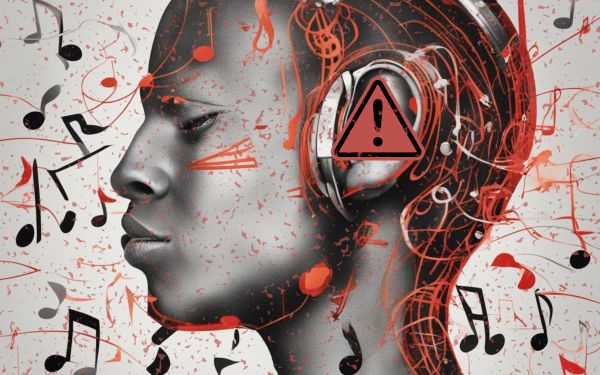
Tinnitus is a serious condition, but that’s not what the “It” of the line above really means. Instead, it’s more important to wonder why having tinnitus would invalidate the time invested in producing music, or even your perceived ability to do so, in the first place.
Music should be about the experience of making music and not so much about the result. It’s the aged-old journey, not the destination metaphor. And this holds up with almost all musical vocations, save for, it seems, music production. Parents don’t force their kids to learn piano when they’re young with the assumption that they’ll be the next Ben Folds, and old farts don’t sit on the porch with a guitar dreaming that they’ll one day be John Mayer.
But with music production, the general conceit is that everyone gets into the hobby to get signed to big labels, tour the world, and make a living off their passion. This mindset, pervasive around the production community, is doing a disservice to the aspiring producers to both the direct community and the outsiders who look in with aspiration. Believe it or not, you haven’t failed at production if all you did was have fun but I think that simple concept is lost in the general dialogue.
So before we get too far into the weeds here, know that making music is ALWAYS worth it, and it’s never time wasted, no matter what percentage of the frequency spectrum you can hear and, more importantly, feel.
The Basics of Tinnitus
So, maybe you’re wondering about tinnitus, right? If not, blow past this section and dive into the tips and words of advice.
Tinnitus is that nagging, elusive noise in your head that never goes away but is just ignored, at best, for a while. For starters, tinnitus isn’t a one-size-fits-all kind of issue. It manifests in various forms, like tinkling, hissing, or even as music, and can be sporadic or persistent. Subjective tinnitus is the most common type, often kicking in after exposure to loud noise. But there’s also neurological, somatic, and objective tinnitus, with their subtypes—musical, pulsatile, and low-frequency which can all be perceived as a whole spectrum of buzzes and rings.
The chances of you, a music producer, facing tinnitus increase if you crank the volume too high on your headphones or expose yourself to loud sounds for long periods. The “long-period” aspect of this is the most important, as our ears are naturally able to somewhat handle short bursts of loud noises but quickly run the risk of lifelong damage after being exposed for periods longer than an hour. But don’t freak out; the impact varies from person to person.
To keep it in check, remember the 60/60 rule: 60 minutes of listening at 60% volume, and then give your ears a break.
If this sounds like you, it’s critical to consult a medical practitioner for a proper diagnosis and potential treatment plans, including hearing aids, counseling, or even sound therapy; after all, this article is not designed to diagnose or treat but more to offer insights and perspectives on living and creating despite the issues. There’s no surefire cure, but treatments can make life much easier.
So take it seriously, but don’t let it become your creative roadblock. More producers than you think have made their best work to date despite suffering daily from tinnitus.
Famous Producers with Hearing Issues

It’s important to note that every artist and musician experiences and approaches tinnitus differently. What might come off as a monitor annoyance to one artist could be a debilitating experience to another; case studies genuinely run the gamut.
But suppose we set our sights on the positive and look for the best outcomes. In that case, you’ll quickly notice that the top levels of the industry are packed with those who have experienced hearing loss (after all, DJing extended hours, multiple nights a week, on massive sound systems comes with an obvious set of occupational hazards).
The prolific production-based content creator Andrew Huang doesn’t let his hearing struggles hold him back and is super open about it. The guy’s got a whopping 50 albums to his name, a YouTube following that’s in the millions, and freely shares his expertise in sound engineering.
Anjunadeep heavyweight Jody Wisternoff is another case study of successful producers who have learned to live and thrive with the condition. When tinnitus peaked, Jody Wisternoff found it deafening and sleep elusive. It was so intense he thought about ending his life. Initially a teen hip-hop prodigy, Wisternoff became a big name in the rave and techno scene. Everything took a nosedive when tinnitus hit, making work and sleep nearly impossible and worsening his condition for about four months.
Jon Carter, another DJ dealing with tinnitus and a close friend of Wisternoff, also found his career and marriage threatened by the condition. Both DJs found solace in talking to fellow sufferers. Carter recalled telling Wisternoff that he’d get used to the tinnitus, a prediction that eventually came true for both of them.
Wisternoff credits his condition to an especially loud gig in Slovenia in 2006. He turned the volume to the max to compensate for a quiet track and left it there, forgetting to adjust it. Despite the ringing in his ears, he didn’t initially worry, thinking it would disappear like it usually did. It didn’t. But in time, he learned to cope.
Editor’s Note: The above example was sourced from an interview with Wisternoff that we discovered a few years back, which stuck with us. The interview now seems to elude our editorial team, but if found, we will link it to I’ve credit where credit is due.
Real Tips For A Real Problem
Less Gain Is The Game
This one always sounds so evident to those for whom it’s too late, but the easiest way to avoid getting tinnitus in the first place is to protect your ears by monitoring, producing, and working at low volumes. It is essential to be mindful at all times, not just at the club or studio. For many, keeping a decibel reader on hand can help them stay mindful of how loud the world around them is. The accumulation of volume from a television, barking dog, and crying baby can all add up to make for a dangerously loud environment that has nothing to do with the studio – I speak from experience, trust me.
This doesn’t mean you should quit listening to music altogether. No, our lives are music! But consider this a part of your new tinnitus-friendly lifestyle. Keeping the volume low minimizes additional ear strain and might help you manage the symptoms more effectively, which is about as much as you can hope for once tinnitus has onset.
Rain Sounds: Your Nighttime Lullaby
Rain sounds can be a godsend when tinnitus tries to play the role of a sleep thief. White noise or ambient sounds like rain can help mask the ringing, making it easier to drift off to sleep. These sounds act as an audio blanket, enveloping the irritating high-pitched whine that tinnitus can bring.
What’s the science behind this? It’s all about distraction. Your brain finds it easier to focus on the ambient sounds rather than the ringing, allowing you to relax and sleep better.
Because sleep heavily affects tinnitus, it quickly becomes a vicious cycle where the tinnitus makes it hard to drift off, and the lack of sleep only exacerbates the escalating problem. But using ambient noise and soundscapes like this while you drift off can help relax your mind and give your ears a break by allowing them to focus on something other than the ringing.
Wired Headphones Over Bluetooth
While there is no science behind Bluetooth directly affecting tinnitus, enough producers and artists draw anecdotal correlations between the two to warrant at least a small note about the issue.
While much of this is from assumptions and anecdotal evidence, it’s easy to make the connection that wireless headphones are just so much easier to crank up the volume on than wired headphones, which can easily be the culprit when it comes to hearing damage when using Bluetooth and wireless headphones over extended periods.
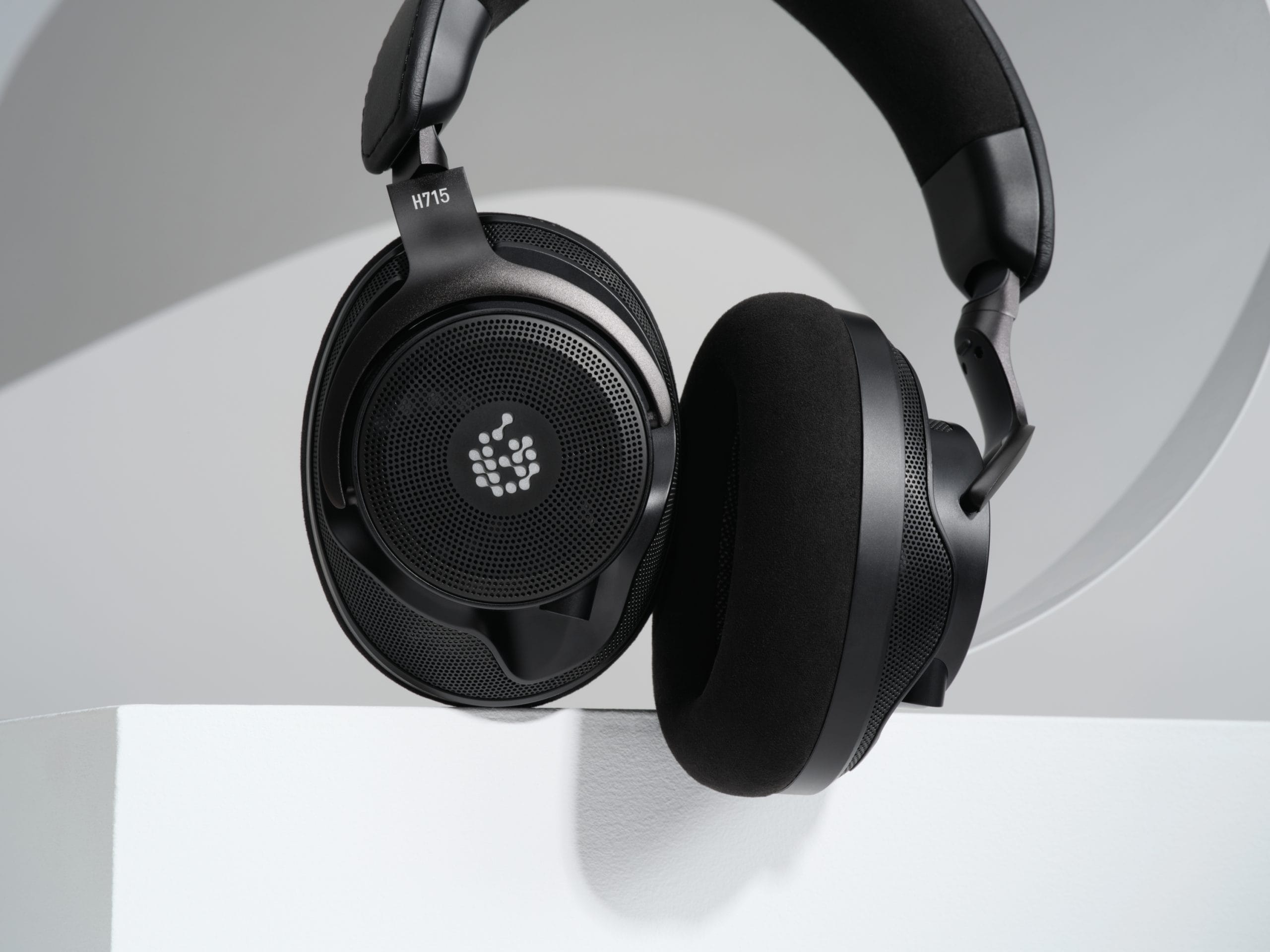
Want to cut down the risk further? Be smart about your earphone choice. Opt for ones with noise-cancelling tech. They block external noise, so you’re not tempted to crank the volume to compensate for the clamor outside the headphones.
Drink Up, Calm Down: The Wonders of Water for Tinnitus
We get it; sometimes, the most straightforward solutions are overlooked, like good ol’ H2O. It’s no secret that water has myriad benefits for your overall health. But, for tinnitus sufferers, staying hydrated could mean the difference between a bearable day and a dreadful one. Dehydration thickens the fluids in your ear, potentially making the ringing louder. Drink enough water to give your body a fighting chance to make that annoying buzzing take a backseat.
The extra added benefit here is that chugging water in the studio will cause frequent breaks as you run to the bathroom, which can further help curb the effects of hearing damage.
Tools and Tech to Help Out

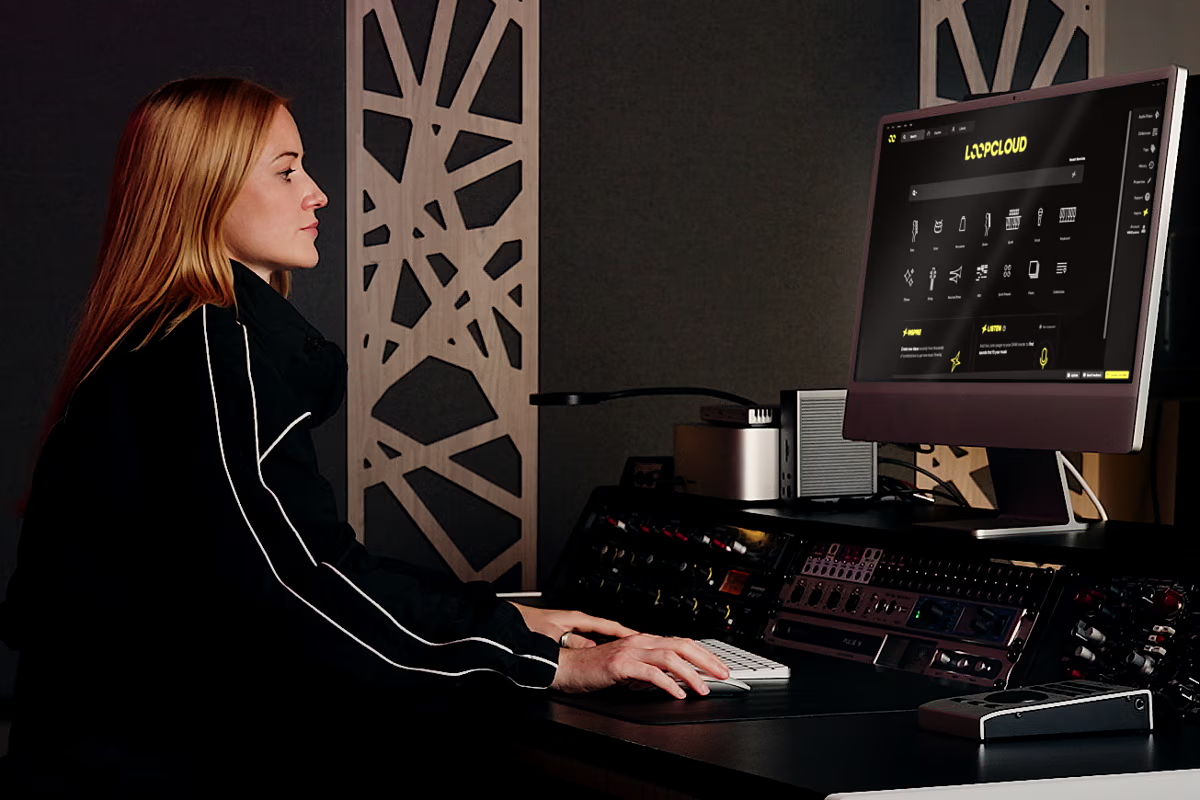
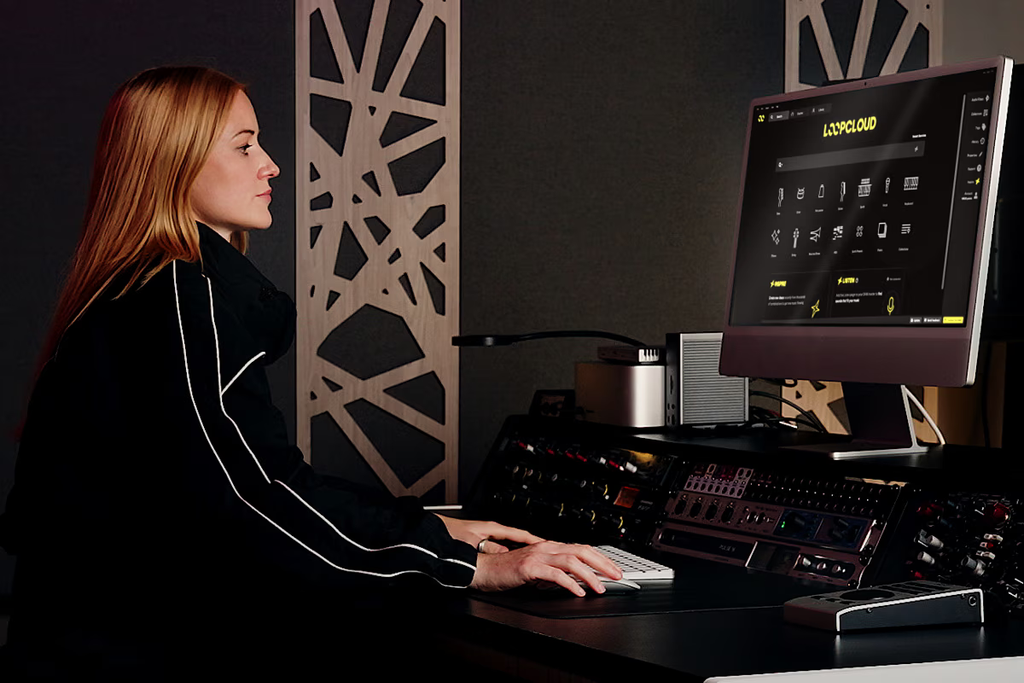
Another essential thing to remember when considering if it’s worth your time to get into music production if you’re already suffering from hearing loss or tinnitus is that there is an endless amount of tech that can take some of the heavy-lifting and surgical listening off of your ears and let your eyes deal with. Sure, it’s a common cliche at this point for Reddit users and Facebook commenters to say that you should trust your ears and not your eyes, but that’s by no means a catch-all phrase.
There are a ton of oscilloscopes and readers that you can quickly and accurately see the frequency bands and how they measure up to reference tracks or that use AI to give you educated guesses on how much bass or top-end your track still needs. To be frank, the list of different options would take up far more text than you’re likely willing to read, so let’s say it goes beyond this article’s scope.
Check Out All Of Mastering The Mix’s Plugins Here
Though if we did have to recommend a plugin or bundle of plugins for referencing, the team at Mastering The Mix has created an entire suite of referencing and mixing tools that make mixing everything from individual tracks to the entire master easier than ever. They heavily rely on visuals to match the reference tracks you import into them, so you don’t need perfect hearing to get comparable mixdowns!
But if we had to drop one key piece of advice, it would be…
Feel Don’t Hear
The best mixdowns are far from perfect, and their blemishes and resonances are the fabric that makes the soul of the record. Only amateur mix engineers shoot for something perfect in any extent of the word, and the best engineers and artists know a mix is truly finished when they feel that it is, not when they hear it is.
They feel the texture of the record’s sonics and the emotion each instrument and layer adds to the composition. Mixdowns and masters are all about the feeling and texture and not so much the surgical precision that many aspiring professionals assume an excellent mix is.
Conclusion
Let’s get one thing straight: Tinnitus or no tinnitus, you don’t need anyone’s permission to produce the music you feel called to make. Sure, tinnitus poses a unique challenge, especially in a field that’s all about sound. But let’s drop the narrative that it’s the be-all and end-all of your creative journey. You know what’s the real enemy? The preconceived notions that you’re only a success if you’re touring worldwide and signed to some big-label conglomerate. That’s what’s stifling the creativity and originality in the industry. So you have tinnitus. So what? Beethoven composed some of his most extraordinary works when he was almost entirely deaf. It didn’t stop him on the piano; it doesn’t have to stop you in Ableton.
We’re in an era where technology can compensate for what your ears can’t catch. And even if you think your ears are your primary tool, remember, music is a feeling. The guts and grit take you across the finish line, not necessarily the pristine quality of your high hats.
So whether you’re a seasoned producer or just starting to dip your toes in music production, don’t let tinnitus—or anything else—stand in your way.

Will Vance is a professional music producer who has been involved in the industry for the better part of a decade and has been the managing editor at Magnetic Magazine since mid-2022. In that time period, he has published thousands of articles on music production, industry think pieces and educational articles about the music industry. Over the last decade as a professional music producer, Will Vance has also ran multiple successful and highly respected record labels in the industry, including Where The Heart Is Records as well as having launched a new label with a focus on community through Magnetic Magazine. When not running these labels or producing his own music, Vance is likely writing for other top industry sites like Waves or the Hyperbits Masterclass or working on his upcoming book on mindfulness in music production. On the rare chance he's not thinking about music production, he's probably running a game of Dungeons and Dragons with his friends which he has been the dungeon master for for many years.