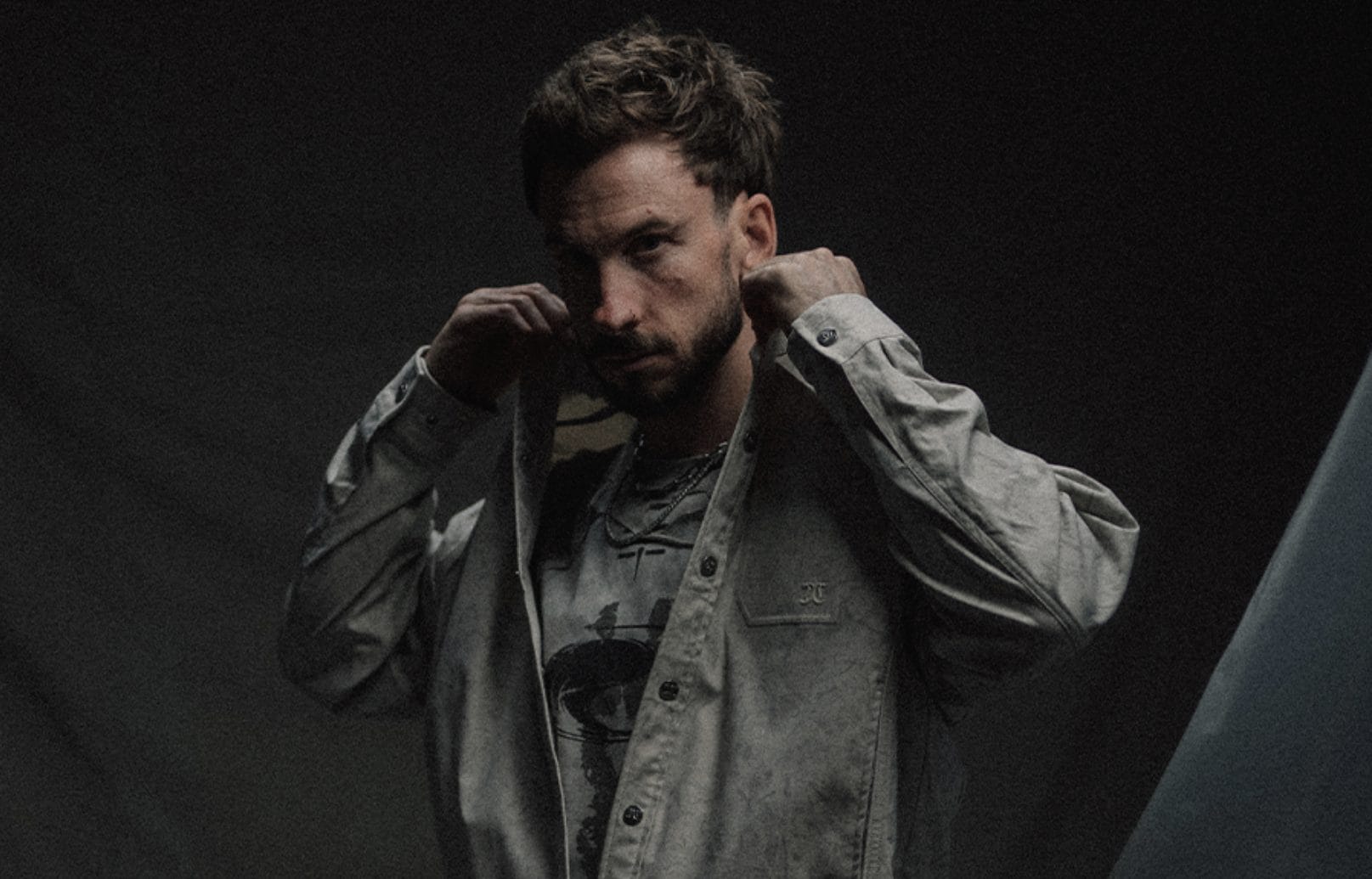
It’s something of an understatement to say that Paul Sawyer has firmly stamped his mark within the electronic music scene. Over the last three decades he has never stopped working, and now boasts a catalogue that includes originals and remixes on storied labels such as Perfecto Records, Pure Progressive, Black Hole Recordings, Armada, Toolroom and many more, including his own highly respected Krafted Underground imprint. Few artists have such a long career; fewer still operate at such a high level of consistency and creativity.
Earlier this year Paul released 30 Years A DJ – a retrospective of his time as an artist – and has just released a remix of Phildel’s ‘Storm Song’. Originally revealed in 2014 on Phildel’s album The Disappearance of the Girl, Paul has now breathed new life into this iconic melody.
Progressive house has a rich history and has seen many transformations. How do you maintain the core essence of the genre in your own releases while also pushing the boundaries?
Ultimately my own releases need to fit the style of progressive house to ensure that I can play them in my own sets and they are fit with the tracks I include in the playlists. It also needs to appeal to other progressive DJs so my tracks are used in their sets. Progressive house has been my thing for years, right back from the 90’s, so all my contacts are within that scene. It’s the sound I love and will always stick with. Of course, I will push the boundaries by going more uplifting or maybe towards melodic techno, but the main body of the tracks are all progressive sounds.
As a genre, progressive house can be both underground and mainstream. What is your approach at Krafted to striking a balance between commercial success and staying true to the underground roots of progressive house?
That is something that I always sit in between to be honest. I’ve been releasing a lot of uplifting progressive house with lots of vocals for quite some time. It does mean that my music doesn’t always appeal to the pure progressive DJ’s who don’t play a lot of vocals, but it does mean my music will cross over to some of the trance dj’s. I don’t tend to worry about it, I just make the sound I love and I love working with vocalists.
The progressive house scene is global, with pockets of innovation all over the world. How do you keep your ear to the ground for emerging trends, and how do they influence the direction of your own music and the artists you sign to Krafted?
Yes very much so. There’s been a real turn towards melodic techno for a while now. Mainly more so with events. Progressive house has a huge following in terms of listeners. Not so much when it comes to events these days.
I keep an eye on the stats and make sure I look at where my music and the labels music is mainly streamed. We have a massive following in the USA and I’d say more than 80% of our listening figures are from there. It’s imperative that we don’t sway too much away from our usual sounds as I’d hate to lose the audience we currently maintain.
Having run the label for so long now, you know what sound works and most artists already know by doing their homework before making demo submissions.
Can you detail your approach to layering and texturing in a track, and how do you decide when it has just the right amount of complexity without overproducing?
Probably the most important part of any of my tracks. It’s why I called my radio show ‘Textures’!
It’s very easy to over do it and complicate the sound. Less is more, this is something Simon, my partner at Krafted and I are always saying to each other. I guess with experience this becomes easier.
In the realm of progressive house, the interplay of melodies and rhythms is key. Could you share how you fine-tune this balance in your productions, and perhaps give an example from one of your recent works?
I just love playing melodies against the drums, very much a ‘call and response’ way. This obviously works with the different sounds within tracks as well.
The best example of call and response is my release called ‘Reign’.
Studio gear and software constantly evolve. How do you integrate new production tools or techniques into your workflow, and can you share a recent instance where this significantly impacted the final sound of a track?
I’ve recently changed my sound slightly and moving towards a more underground sound and leaving behind the uplifting style. I feel I’ve done that for so long now that it’s time for a change and aim at more dancefloors.
I do still have a couple of releases in my usual style, but I’ve already got a release signed in my new direction with Betoko on ICONYC. My recent release ‘Endless Path’ was the start of me experimenting with the deeper sound.
Sustaining a record label like Krafted Records demands vision. Could you share any principles that have guided your decisions and contributed to the label’s longevity?
It’s certainly evolved since we first started. One of the best decisions was splitting it all into the four labels to ensure we concentrate on a particular sound on each label.
It’s all made possible with having a great team too. Our A & R Fran Martinez does an amazing job, as does Darren Braddick and recently Paul Moore with A & R for Krafted Digital.
Simon Sinfield runs Krafted Records concentrating on the more chilled side of our releases and Organic House.
The most important thing for us has been building the respect within the industry, it’s ensured we have secured lots of great artist and opportunities that we dreamed of doing right at the start. The biggest being a show host on BBC Radio 1 for 2.5years.

Earlier this year you released your 30 Years A DJ album. How did it feel to look back and reflect on the last three decades?
That was just amazing to be honest. I didn’t expect to receive such a great response. The music press were amazing, I lost count of how many interviews I did for that album.
The 30 hour radio show was a great part of that celebration, having so many well known DJ’s jump at the chance to be a part of the show.
It was also a strange feeling after the hype died down. It almost felt that everything was done and I didn’t need to do any more. It gave me the chance to actually stop producing for a while and reflect on everything. This resulted in a new lease of life with Krafted, so we are firing on all cylinders for what we have planned.
What can we expect from you and Krafted in 2024?
2024 marks 10 years of Krafted, so that is the main focus for 2024. We have a huge release planned to celebrate the milestone with some amazing artist involved.
We also have a big event planned later in the year as part of the celebration. We can’t wait to announce this when the time is right!
I have my release with Betoko on ICONYC and I also have a collab with Deestopia that will be out in the new year too.
After working on the Storm Song remix with Phildel, we also worked on an original called Skylines, so I’m really looking forward to that coming out. The results from Storm Song have been amazing already since it’s release.