Every engineer, producer, artist, podcaster, and anyone else making and working in audio knows you must treat your room. “Knowing your room” is one of the first nuggets of wisdom we acquire while starting this industry. It’s such a common talking point that when I was starting out as a music producer, I was overwhelmed by the sheer amount of voices in the choir recommending this and advising against it.
But if producing music for over a decade has taught me anything, it’s that most things in this line of work aren’t as convoluted as the Pros-On-Reddit make it out to be. The caveat is that you can ask the right questions to the right people.
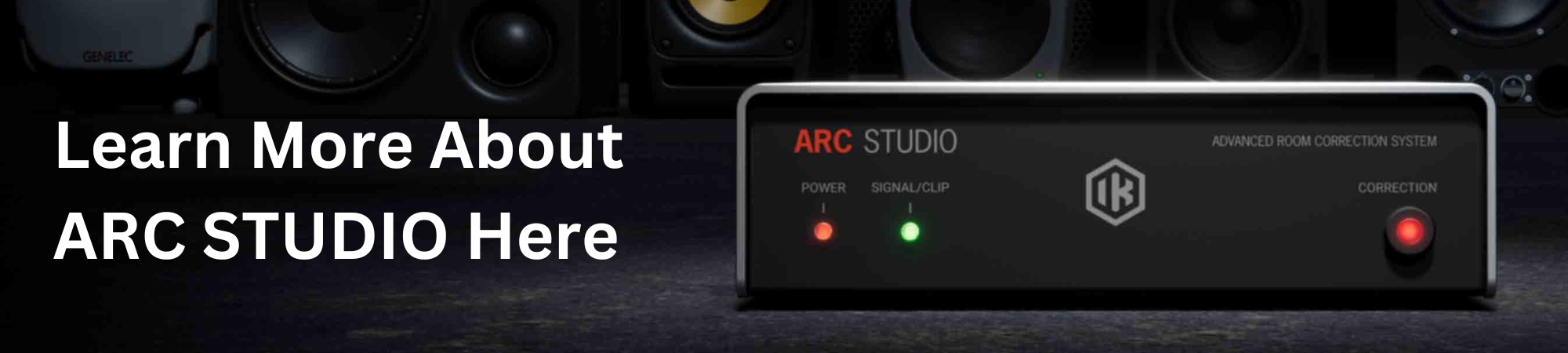
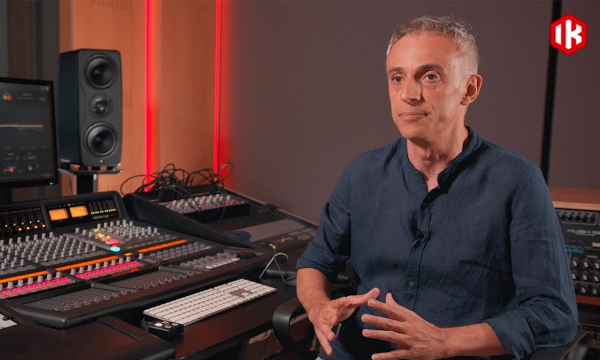
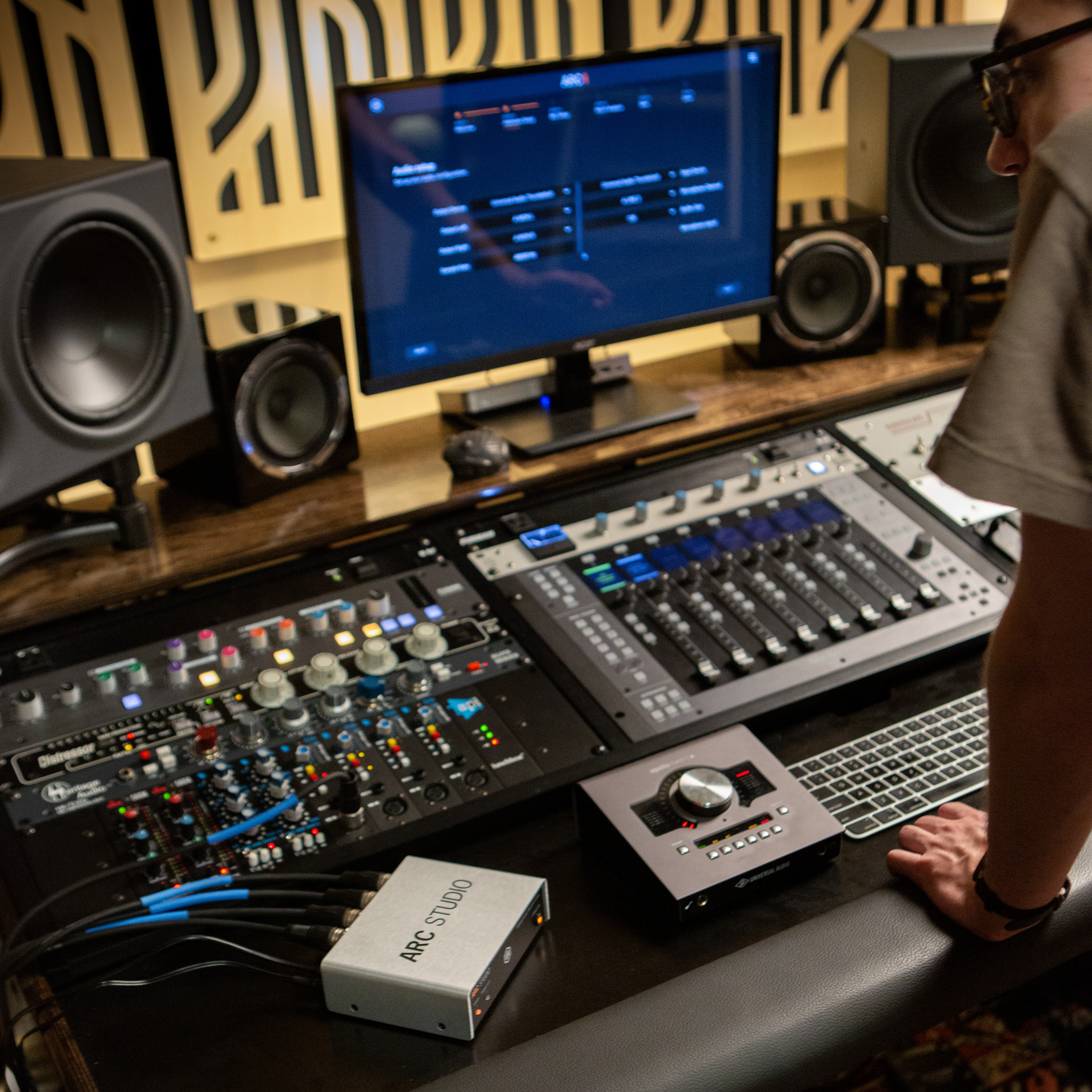
And with the launch of their latest room-correction technology officially on the market, there’s no better brain to pick about the common misconceptions and myths around treating and correcting your room than the founder of IK Multimedia, Davide Barbi.
So check out the new ARC STUDIO, if anything, to prove that this guy knows what he’s talking about before diving into our discussion on room shapes, expediting how long it takes to learn your room, and so much more.
What impact does room shape have on room correction effectiveness?
The room shape greatly impacts how a space will perform as a listening environment. Low-frequency modes are typically more severe if the room is square or has regular dimensions or shapes.
Who can benefit the most from using advanced room correction techniques vs. investing in studio headphones?
Listening and adequately evaluating a mix on headphones is difficult. Monitoring speakers is the fastest and most comfortable way of working for everyone in the studio when producing and mixing because it gives the correct perspective to the program. Unfortunately, even the best speakers are not helpful if placed in a bad-sounding room.
How does room correction software differ from acoustic treatment?
Sound treatment can be done at various levels. All project studios typically have a minimal set of sound absorption panels to tame the first reflection in the mid and high frequencies. And this is not enough. Proper acoustic treatment includes wide-band absorption, diffusion, and low-frequency trapping.
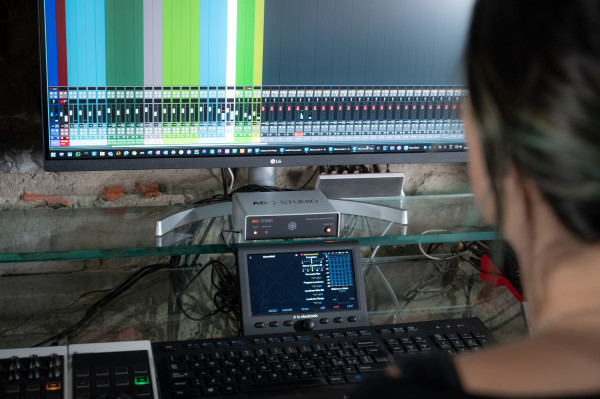
ARC Studio can help create a precise and reliable listening environment in all those situations where the acoustic treatment is either absent to minimal or less than perfect.
In those conditions, ARC Studio can be a lifesaver and make a non-workable environment a space where it’s possible to work correctly. Even in finely treated rooms, ARC can noticeably improve the monitoring system, bringing an almost perfect space to something ultra-accurate.
Can room correction hinder the learning process for new audio engineers?
No, it’s the opposite!
Room correction allows engineers to hear what they’re doing more truthfully, which is valid for both new and experienced engineers.
Hearing the truth in your work allows the engineer to focus on mixed choices for what they are instead of fighting with room-induced issues that can be the obstacle to making the right choices.
How does plug-in latency affect the monitoring and mixing process?
The ARC 4 plug-in has negligible latency. Of course, high-latency plug-ins cannot be used for monitoring to avoid making tracking impossible. However, ARC 4 is not one of those, and the same is true for the ARC Studio processor.

Will Vance is a professional music producer who has been involved in the industry for the better part of a decade and has been the managing editor at Magnetic Magazine since mid-2022. In that time period, he has published thousands of articles on music production, industry think pieces and educational articles about the music industry. Over the last decade as a professional music producer, Will Vance has also ran multiple successful and highly respected record labels in the industry, including Where The Heart Is Records as well as having launched a new label with a focus on community through Magnetic Magazine. When not running these labels or producing his own music, Vance is likely writing for other top industry sites like Waves or the Hyperbits Masterclass or working on his upcoming book on mindfulness in music production. On the rare chance he's not thinking about music production, he's probably running a game of Dungeons and Dragons with his friends which he has been the dungeon master for for many years.