The world of music production and synth players is evolving, and guitar pedals have become a staple in many setups. Analog guitar delay effect pedals in particular have seen a surge in popularity in recent years. As a result, boutique companies continuously push the boundaries of innovation and update their pedals to compete in the modern market.
To keep up with the times, Gibson re-launched the Maestro line with ten new pedals, each with its unique effect. Among these is the Maestro Discoverer Delay Pedal, which we had the opportunity to review.
In this article, we’ll dive into the Maestro Discoverer Delay Pedal and explore the features and specifications of the pedal, as well as its overall performance and sound quality. Whether you’re a seasoned guitar player or a synth enthusiast, you’ll find valuable insights in our review. So, let’s get started and find out if the Maestro Discoverer Delay Pedal deserves a spot in your setup.
What Is The Discoverer Delay Pedal?

Analog grit and texture are the gold standards for many musicians and producers of the digital age, and the Discoverer Delay matches these expectations with simplicity and streamlined functionality. Though it’s designed primarily to give your sound a warm and lush analog BBD delay effect, the Maestro Discoverer Pedal doesn’t just stop at the basics.
Like all the new Maestro pedals, the capabilities of this pedal are doubled through the flip-switch at the top. On the Discoverer specifically, the toggle switches between ‘Mod-On’ and ‘Mod-Off.’ This is where things start to get fun with this pedal. While we will be diving into some of the nuances of the modulation options of this pedal a bit later in this article, for now know that this pedal can do anything from a washy chorus effect to lush, bright, and present tape delay tones.
It’s an approachable delay pedal, perfect for anyone looking for that imperfectly desirable analog delay sound in their productions and live playing.
What I Loved Most About The Discoverer Delay Pedal
We are massive fans of delay pedals at Magentic and have slowly racked up a small collection of powerful echos and delays over the years. Because of this, whenever we add a new delay to the collection, it has to serve a specific purpose and do something that none of the other delays do.
Here are the two ex-factor things about the Discover Delay that caught our attention.
It’s Bright
The Maestro Discoverer Delay has a brighter and far more present timbre than some of the other delay units in the studio, including the Microcosm and Boss DM-2W. This means the sound stays with you, even as it slowly fades. I’ve found that most delay effects – both outboard, and VSTs – often become grungy and muddy towards the tail end of the echo, but this is hardly the case with the Discoverer Delay.
It retained its crispy and biting analog tone throughout most of the delay’s decay, which was awesome! This effect sounded especially tasty when paired with Maestro’s other pedals, like the Ranger Overdrive or the Arcas Compressor Sustainer.
So if you’re looking for a delay signal that is more than just a mixing tool and adds a unique and impactful quality to the sound, this pedal could easily be your best friend.
It’s Customizable

As with all Maestro pedals, the streamlined design of only a few parameters to adjust offers a deceptively large amount of customization to the sound. This allows you to get anything from short and snappy slapback delays to cosmic-level effects when all the parameters are cranked up to the max.
But that’s far from all.
A secret weapon of this pedal is the internal trim pots that allow you to control and adjust the modulation width and rate when the pedal is toggled to ‘Mod-On.’ This opens up even more customization options, allowing you to get the proper movement and space in your sound or play style.
What I Wasn’t Crazy About
One quality might cause some hesitation for a specific swatch of music makers. Sure, this won’t be a dealer breaker for many and even less of a surprise for others, but it is worth mentioning that…
There’s No Sync
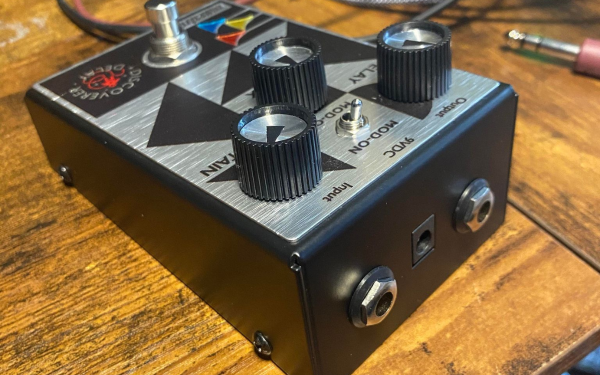
The straightforward and streamlined approach to this pedal which harkens back to Maestro’s original designs, omits fancier functionalities like MIDI sync. While this should hardly surprise many guitarists, it is still a quality-of-life feature that I could imagine impacting the opinions of music producers looking to add a tasteful and affordable analog delay to their collection.
Delays can be quite fussy in music production and muddy your mix fast if you don’t dial them in. Pedals like the aforementioned Microcosm and the Boss DD-200 Digital Delay Pedal are powerful studio tools that allow you to sync the BPM of the pedal to your DAW, a quality-of-life feature hard to go back from once you’re used to it.
That said, the imperfect nature of analog gear is often the exact reason why producers and other music makers flock to such devices, as many believe that its off-grid nature and timings are the secret sauce to making your music sound more alive and human.
Final Thoughts
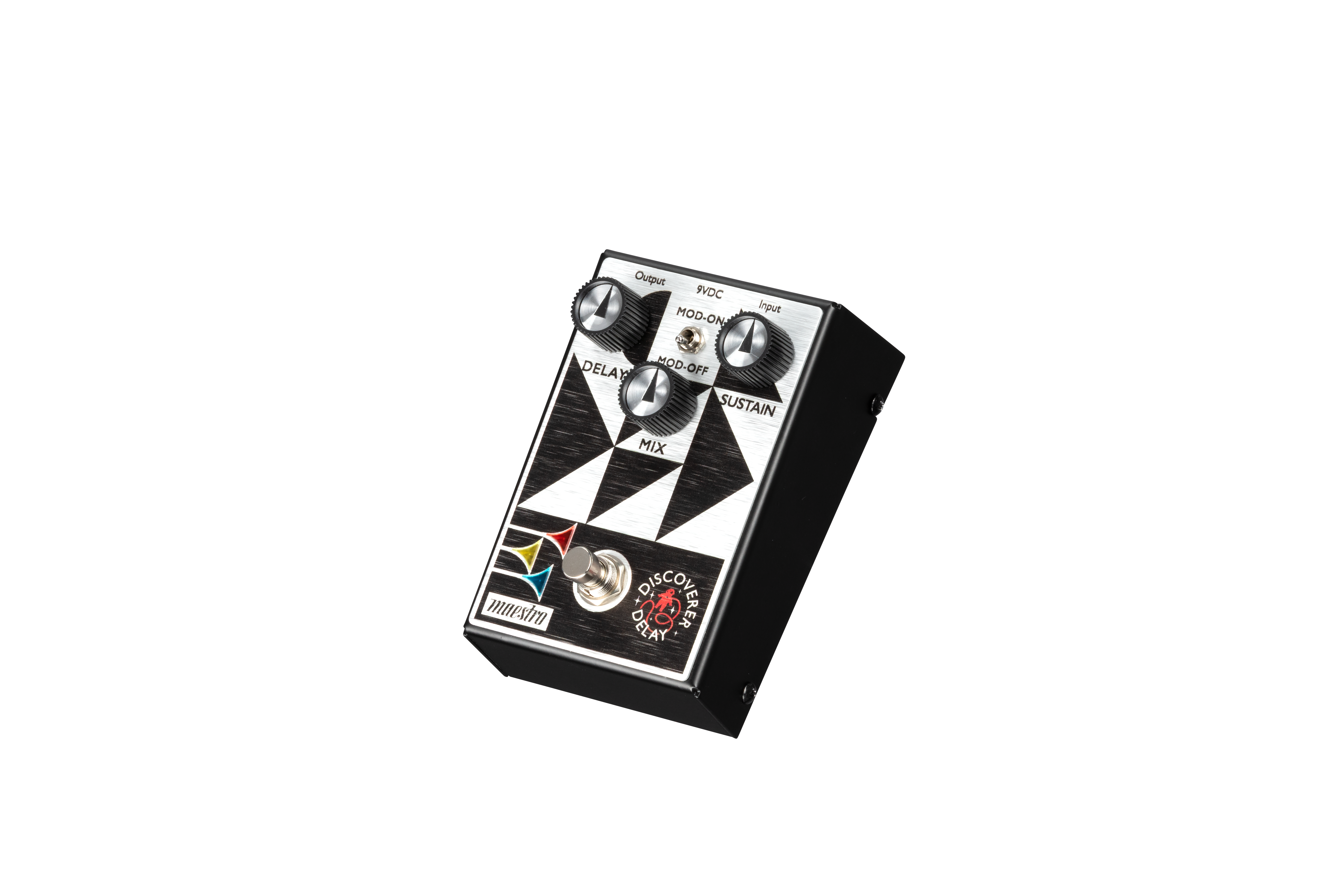
After dabbling extensively with a wide range of the Maestro pedals in the studio, both on DAW-based productions and noodling around on my Stratocaster, I’ve found a common theme along all the pedals in this line that also holds true for the delay. They are affordable and only take up a little extra room on the pedal board (at least compared to the bulkier effects boxes like my Microcosm).
The simple truth is that these pedals are fantastic tools for producers who want to add analog tools into their workflow without dropping thousands of dollars on industry-standard studio desks and gear. For just over $150, the Discoverer Delay allows you to get warm and lush analog delay that can be dialed in to offer bright slapbacks, cascading washes, and everything in between.
Overall, we highly recommend it!

Will Vance is a professional music producer who has been involved in the industry for the better part of a decade and has been the managing editor at Magnetic Magazine since mid-2022. In that time period, he has published thousands of articles on music production, industry think pieces and educational articles about the music industry. Over the last decade as a professional music producer, Will Vance has also ran multiple successful and highly respected record labels in the industry, including Where The Heart Is Records as well as having launched a new label with a focus on community through Magnetic Magazine. When not running these labels or producing his own music, Vance is likely writing for other top industry sites like Waves or the Hyperbits Masterclass or working on his upcoming book on mindfulness in music production. On the rare chance he's not thinking about music production, he's probably running a game of Dungeons and Dragons with his friends which he has been the dungeon master for for many years.